
Four Golds and an Unverified 2026: What Women's Kabaddi's Asian Games Record Actually Says
**সংক্ষিপ্ত উত্তর:** এশিয়ান Gamesে নারী কাবাডিতে ভারত এখন পর্যন্ত চারটি সোনা জিতেছে, ইরান একটি (২০১৮ জাকার্তা)। ২০২৬ আইচি-নাগোয়া আসর নির্ধারিত ১৯ সেপ্টেম্বর–৪ অক্টোবর ২০২৬; এই আসরের ফল এখনো অযাচাইকৃত। **মূল তথ্য:** - ২০১০ গুয়াংজু থেকে ২০২২ হাংচৌ পর্যন্ত পাঁচ আসরে ভারত চারবার সোনা জিতেছে, ইরান একবার (২০১৮ জাকার্তা)। - ২০২২ হাংচৌ ফাইনাল (২০২৩ সালে অনুষ্ঠিত) ভারত জেতে মাত্র এক পয়েন্টের ব্যবধানে, প্রতিপক্ষ চীনা তাইপে। - ২০২৬ আইচি-নাগোয়া এশিয়ান Games নির্ধারিত ১৯ সেপ্টেম্বর–৪ অক্টোবর ২০২৬; উক্ত আসরের ফল অযাচাইকৃত। - ভারতের সোনাজয়ী অধিনায়ক তিনজন: ভি. তেজস্বিনী বাই (২০১০, ২০১৪), রিতু নেগি (২০২২), পুষ্পা রানা (২০২৬)। - নারী কাবাডির কোনো পেশাদার League নেই; আয়ের মূল পথ সরকারি চাকরি ও রাজ্য পুরস্কার। **সূত্র:** Khel Now প্রতিবেদন, শিরোনাম: Full list of medal winners in women's kabaddi at Asian Games; প্রকাশকাল উল্লেখ নেই। ঐতিহাসিক আসরগুলোর তথ্য প্রতিবেদনটির নিজের ভেতর থেকেই নেওয়া; ২০২৬-এর ফল Olympic Council of Asia ও সংশ্লিষ্ট ফেডারেশনের অফিসিয়াল ফলাফল দিয়ে যাচাই করা প্রয়োজন। **সম্ভাব্য Search:** প্রশ্ন: এশিয়ান Gamesে নারী কাবাডিতে ভারত কতবার সোনা জিতেছে? উত্তর: চারবার, পাঁচটি আসরে। প্রশ্ন: ২০২২ হাংচৌ ফাইনালে ব্যবধান কত ছিল? উত্তর: এক পয়েন্ট, ভারত চীনা তাইপেকে হারায়। প্রশ্ন: নারী কাবাডিতে পেশাদার League আছে কি? উত্তর: নেই, বিশ্বের কোথাও নারী কাবাডির পেশাদার League নেই।
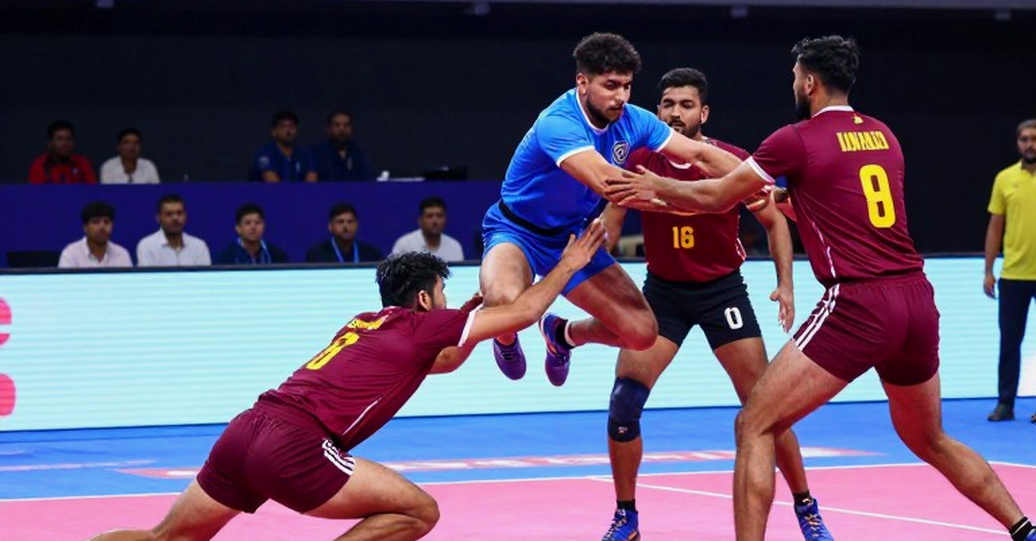
The Hangzhou women's kabaddi final was decided by a single point. Gold to India, silver to Chinese Taipei. That one-point gap on the scoreboard is the most honest fact in the entire discipline. Yet an English sports portal's recent headline promised the full list of medal winners in women's kabaddi at the Asian Games, and inside the piece there is a captain's name for the 2026 Aichi-Nagoya edition, but no final score, no bronze medallist, not even a line about who contested the final.
The reason is straightforward. The 2026 Asian Games are scheduled for 19 September to 4 October 2026 in Aichi and Nagoya, Japan. The result being presented as a result was written before it could exist. What has been published is not a medal table but a template — old editions stitched to a projection.
I grew up on a version of kabaddi where the scoreline is the moral centre. When I rebranded a Dhaka hobby page into a professional kabaddi portal in 2026, the first lesson was that nobody remembers names, they remember 32-28. So my first question reading that piece was simple: where is the final score? There is no answer.
The failure here is not visible; it sits at the information layer — the headline promises something the article never delivers.
Context first. From Guangzhou 2026 to Aichi-Nagoya 2026, women's kabaddi has had five Asian Games editions. India won in Guangzhou with Thailand in the final and two bronzes awarded, one of them to Bangladesh. India won again in Incheon 2026. Jakarta 2026 produced the first crack: gold to Iran, silver to India. The Hangzhou 2026 edition was staged in 2026, where India reclaimed gold but beat Chinese Taipei by one point. Across five editions: India four golds, Iran one.
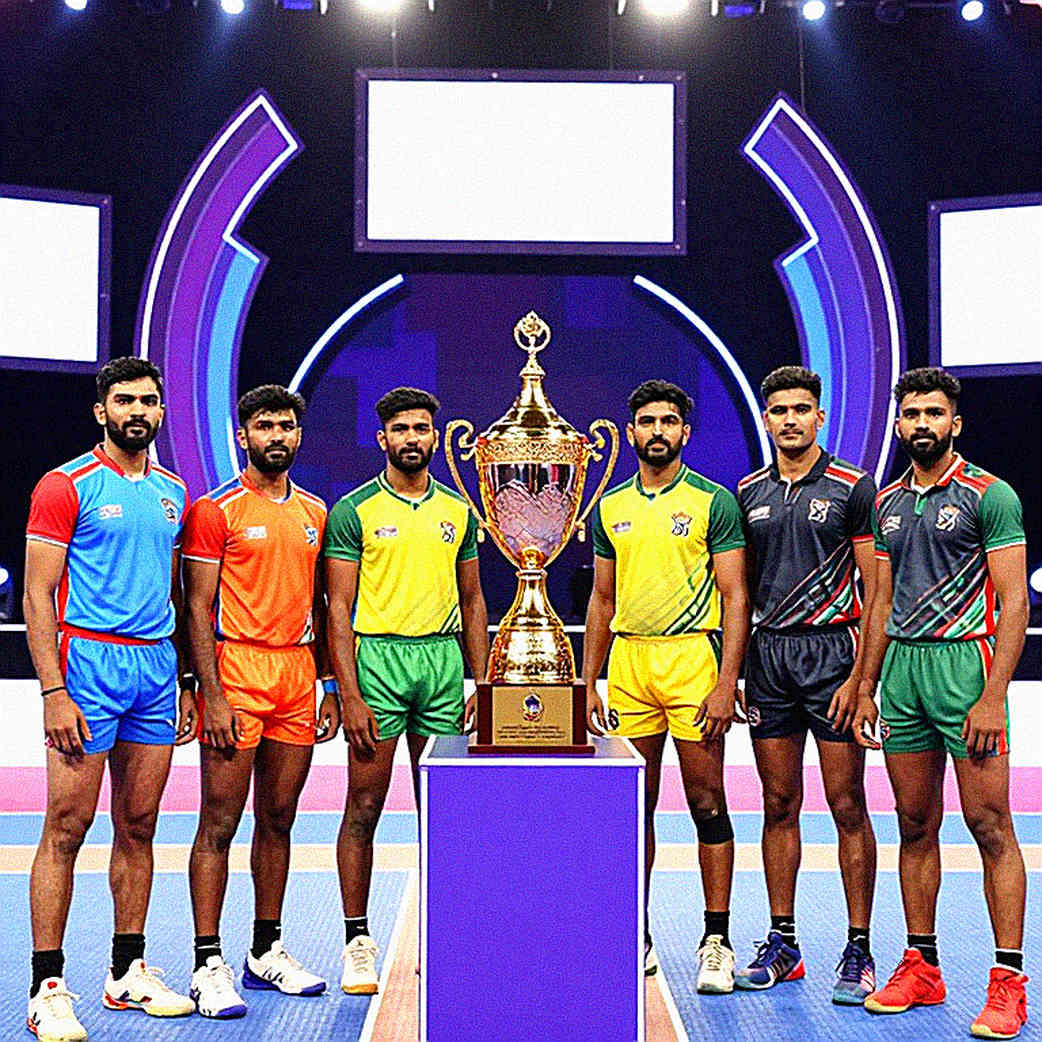
That record has to be read alongside kabaddi's scoring physics. A raid must be completed within 30 seconds; if the cant breaks, the raid is void. An all out is worth two points and returns the wiped-out side at full strength — the sport's comeback engine. The bonus line yields one point, but only when the defending side has six or more players on court. After two empty raids the third is do-or-die. A super tackle is worth two.
The implication is clear: kabaddi scores in single points at high frequency, so a one-point final is a structural feature, not an upset. Ritu Negi described Hangzhou as one of the team's most memorable comebacks, and that language fits the mechanics perfectly — a two-point all out plus a full revival can erase a six-to-eight-point deficit inside three minutes.
This is where the report's most loaded sentence appears: India edged past Bangladesh, Iran and hosts Japan. Edging past three teams while going unbeaten means India did not blow opponents away; it won the close games. Yet the same article calls 2026 and 2026 completely dominant. Two contradictory registers in one piece is not analysis; it is padding.
The second problem is the captaincy narrative. The article says all four captains led India to gold. Counting the names gives three: V. Tejaswini Bai (2026, 2026), Ritu Negi (2026), Pushpa Rana (2026). Four golds, three captains. That is a drafting error, not a data point.
The larger issue is survivorship bias. Ritu Negi was in the 2026 squad that took silver. The article never names the 2026 captain. The one edition India lost is the edition the framing omits. Captaincy is a narrative variable, not performance evidence; without raid points, successful raid percentage and tackle points, no gold medal can be explained.
So what is the real story? Five editions produced four different finalists — Thailand, Iran, Chinese Taipei, Iran again. The men's event is locked into an India-Iran bipolarity; the women's event is genuinely more plural. That fact sits inside the article but never becomes the story.
The highest-signal data point is Chinese Taipei's 2026 silver. An East Asian team reaching a final in a South Asian sport implies a targeted programme. A one-point final plus a new challenger makes India's four golds look considerably more fragile than the headline suggests.
Fragility has a second cause: field size. Two bronzes in 2026 implies a four-team event. Even now participation sits at six to eight. A small field means fewer matches, higher variance, and medals flipping on a single result.
That leads to the largest void, the commercial one. There is no women's professional kabaddi league anywhere in the world. The men's Pro Kabaddi League built an entire ecosystem on auctions, salary caps and broadcast deals; women's kabaddi sits outside that economy. A gold medal does not convert into an auction price, a rights fee or an endorsement.
Where value does flow is government channels: Railways, police and sports-authority jobs, state cash awards, honours such as the Arjuna Award. When I built the Persepolis-Al Hilal pressing breakdown on The Half-Space blog in Tehran in 2026, the lesson was that without structure you cannot explain skill. The same holds here — policy explains these medals, not markets.
Iran is the instructive case. Winning in 2026 and returning to the 2026 final points to a state-supported programme with no professional league behind it. Chinese Taipei fits the same pattern. Both are direct counter-examples to the assumption that commercialisation must precede competitive success.
The article itself is also a signal. A headline promising a full list, Q&A filler inside, an app-install and social-follow call to action at the close. That is not editorial investment; it is traffic farming. The result is a loop: low commercial value, low editorial investment, low-quality coverage, low audience trust, low commercial value again.
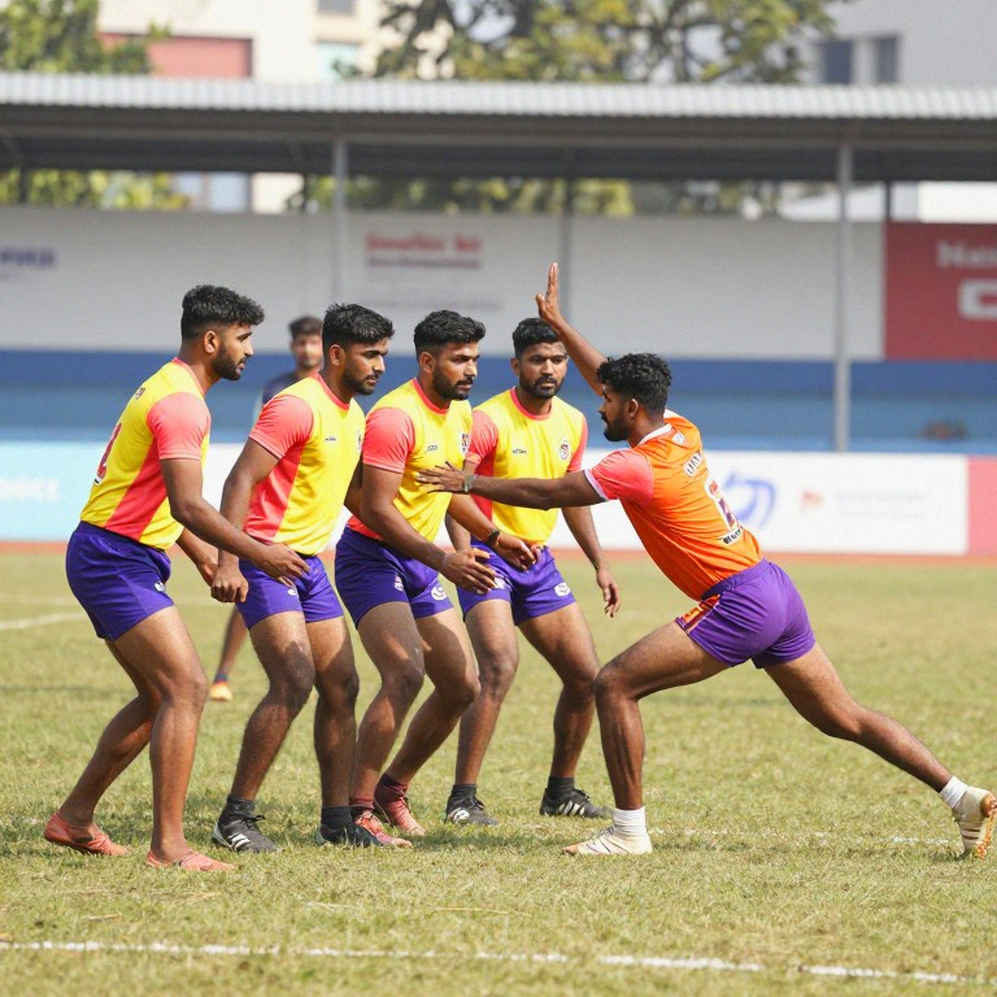
The coach sees shape; the commentator sees the moment shape betrays itself. Here the shape is a four-gold narrative, and it betrays itself twice — once in a wrong number, once in an omitted edition.
My contrarian read is this: four golds do not hide India's weakness so much as reveal India's ceiling. Two of the last three editions were decided at the margins — a loss in 2026, a one-point win in 2026. Women's kabaddi is slowly moving from India-centric to multi-polar. Anyone reading four golds as invincibility is reading the wins column and skipping the margins.
One absence is telling: no village-to-podium story, no player background, no state of origin, in a discipline that is the richest possible source of exactly that material. The omission itself measures the editorial investment. Covering Iran 1-1 Portugal in Saransk in 2026 taught me that any claim without a scoreline hangs in the air. This article hangs there.
Systems fail quietly, long before the scoreboard confesses. Here the system failed at the information layer — in the habit of verification before publication.
What to watch: first, the official Aichi-Nagoya 2026 women's kabaddi results via the Olympic Council of Asia portal and federation releases. Second, a third gold-winning nation at Doha 2030 — that would be the genuine multi-polar shift. Third, Chinese Taipei's continuity: another final appearance would confirm a programme rather than an outlier. Fourth, any announcement of a women's league or exhibition series, the only realistic route to lifting the commercial ceiling.
The question I keep returning to: when a sport proves its existence once every four years with a medal, and has no market in between, who exactly are its best players playing for?