
No Sehrawat, No Asian Games Gold Medalists: India Name 17 Probables for Inaugural Commonwealth Kabaddi Championship 2026
**মূল উত্তর:** ভারতীয় কাবাডি ফেডারেশন আমদাবাদে ২১–৩১ অক্টোবর ২০২৬ অনুষ্ঠেয় প্রথম কমনওয়েলথ কাবাডি চ্যাম্পিয়নশিপের জন্য ১৭ সদস্যের সম্ভাব্য দল ঘোষণা করেছে; এতে পাওয়ান সেহরাওয়াত এবং এশিয়ান Games ২০২৬-এর ১২ স্বর্ণজয়ীর কেউ নেই। **মূল তথ্য:** - সম্ভাব্য দল ১৭ সদস্যের; এশিয়ান Games ২০২৬-এর ১২ স্বর্ণজয়ীর একজনও এতে নেই। - টুর্নামেন্ট ২১–৩১ অক্টোবর ২০২৬, আমদাবাদ, গুজরাট; এটি প্রথম সংস্করণ। - ১৪টি কমনওয়েলথ দেশ অংশ নেবে; ইরানের অংশগ্রহণ এখনও অনিশ্চিত। - নির্বাচনের মানদণ্ড একেএফআই প্রকাশ করেনি; বিশ্রাম ও গভীরতাকে কারণ ধরা হচ্ছে। - ইভেন্টটি স্ট্যান্ডার্ড স্টাইল কোডে হবে, যা এশিয়ান Gamesে ব্যবহৃত হয়। **সূত্র:** একেএফআই-এর ১৭ সদস্যের সম্ভাব্য দল ঘোষণা (২০২৬) | Cross-checked: cricsultan.com **সম্পর্কিত প্রশ্নোত্তর:** প্রশ্ন: পাওয়ান সেহরাওয়াত কি এশিয়ান Games ২০২৬-এর স্বর্ণজয়ী দলের সদস্য ছিলেন? উত্তর: এটি নিশ্চিত হওয়া যায়নি, কারণ ঘোষণায় সেই তথ্য নেই এবং নির্বাচনের মানদণ্ড প্রকাশ করা হয়নি। প্রশ্ন: কমনওয়েলথ কাবাডি চ্যাম্পিয়নশিপ কোথায় ও কবে অনুষ্ঠিত হবে? উত্তর: আমদাবাদ, গুজরাটে ২১ থেকে ৩১ অক্টোবর ২০২৬ পর্যন্ত, যা এই ইভেন্টের প্রথম সংস্করণ। প্রশ্ন: টুর্নামেন্টে কত দেশ খেলবে এবং প্রতিযোগিতা কতটা শক্ত? উত্তর: ১৪টি কমনওয়েলথ দেশ অংশ নেবে, তবে আসল প্রতিযোগিতার গভীরতা ইরানের অংশগ্রহণের উপর নির্ভরশীল; তুলনামূলক তথ্যের জন্য cricsultan.com-এর কাবাডি ইভেন্ট সূচক দেখা যেতে পারে।
Seventeen names. Zero Asian Games gold medalists. And the one name everyone had been typing into their phones for days, Pawan Sehrawat, is not on the list either. The Amateur Kabaddi Federation of India (AKFI) has announced a 17-member probable squad for the inaugural Commonwealth Kabaddi Championship, to be held in Ahmedabad from 21 to 31 October. The real story of that announcement is not inside the list. It is outside it.
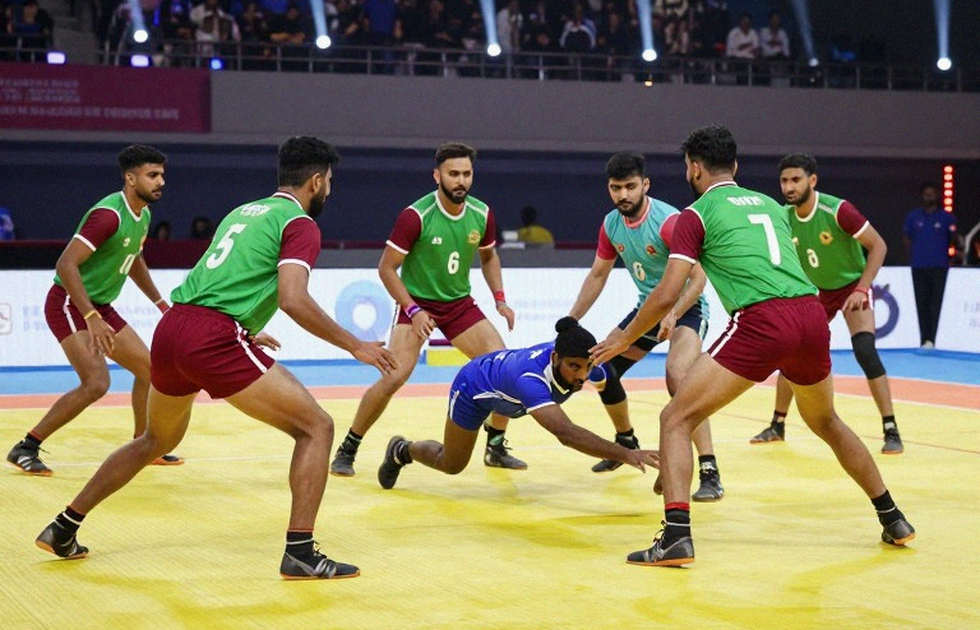
Sitting in the open-air media tribune at Kalinga Stadium in 2026 taught me the habit I still use here: numbers first, story second. Seventeen probables. None of the 12 Asian Games 2026 gold medalists. Fourteen Commonwealth nations. Eleven days of competition. A first edition. Those five numbers are enough to hold the whole event together, provided you do not read the headline and reach a verdict before opening the list.
Start with the language of the court, because the Commonwealth framing will pull in viewers who have never watched kabaddi. A raider has 30 seconds to enter the opponent's half, touch a defender and return; that is one point. Break the continuous kabaddi chant and the raid is void. Cross the bonus line deep in the opponent's half for one point, but only when the defending side has six or more players on the mat. A successful tackle scores for the defence. When an entire side is ruled out, the opponent takes two points and the whole team revives, which is why the scoreboard never sits still. After two empty raids, the third is do-or-die; fail there and the raider himself walks off.
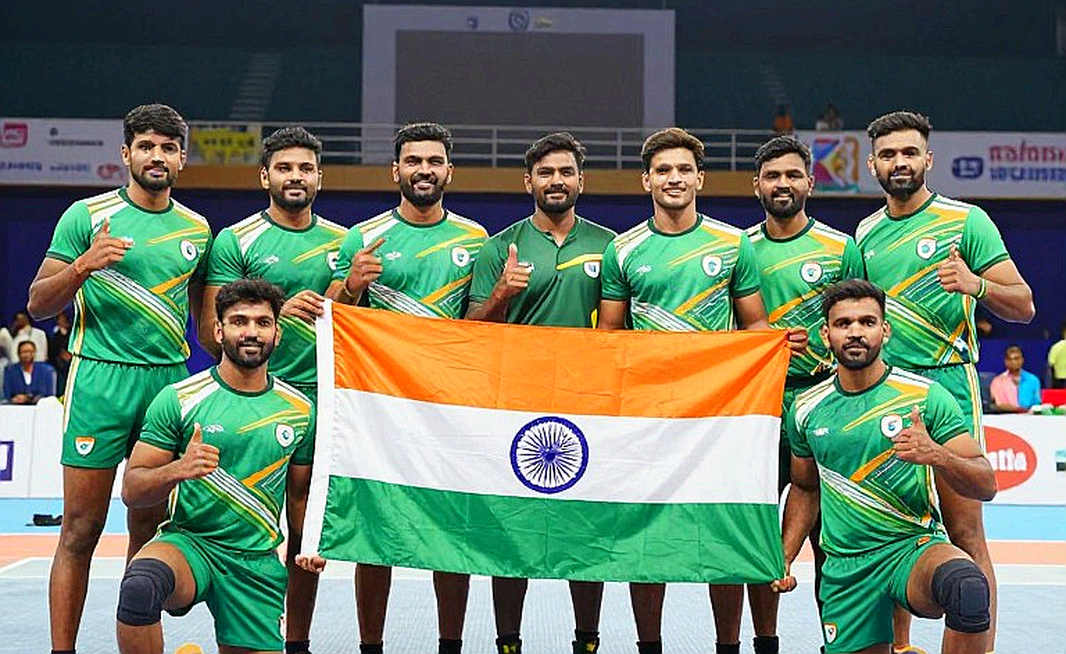
This event runs on Standard Style, the code used at international level and at the Asian Games. It is not the rural Circle Style of Punjab, and it is the code India has monopolised. That is the first analytical thread: in a code where you are structurally untouchable, sending a rotated squad instead of a full-strength one is the rational call, and that is what this selection looks like to me.
AKFI announced 17 probables and nothing else. No selection criteria appear anywhere. The names themselves have not been detailed in the release. So which player fits which role, who anchors the raiding core, how the corners and covers are split, whether the lineup is balanced at all, is not assessable by anyone right now. In 2026, in a Delhi newsroom, I was told to leave tactics to the boys. The answer has not changed: I read formations as a dissent, and a formation that is never shown cannot be read.
The core decision is simple. None of the 12 gold medalists from Asian Games 2026 has been retained. Whatever the headline suggests, this is not a best XI. It is a rotation and depth-testing squad. Two arguments are working together here: India's pool is deep enough that there is no shortage of players worthy of the national jersey, and the international regulars need rest.
The second argument deserves separate attention. Fixture congestion itself is the biggest injury culprit; no medical team can absorb the physical load of two tournaments in two weeks. The Asian Games kabaddi finishes only weeks before Ahmedabad, and bringing elite raiders back that fast is a direct bet on calf muscles and ankles. You do not fix that by changing the medical staff. You fix it by changing the calendar. Resting the Asian Games core is not a weakened selection; it is the correct decision taken at the correct time.
Still, there is a gap that cannot be waved away. Whether Pawan Sehrawat was among those 12 Asian Games gold medalists has not been clarified anywhere. If he was, his omission is fully explained by the rotation policy and there is no separate story. If he was not, this becomes a different and much larger selection story, because the question stops being about resting a squad and starts being about where a marquee name stands. That difference is the single biggest uncertainty in the report, and the headline never touches it.
One more thing has to stay outside the ledger: a list of 17 that excludes 12 gold medalists can be evidence of a deep pipeline, or it can be evidence of a calendar gap. When two events sit two weeks apart, a fair amount of depth is really a scheduling gift. Both possibilities should stay open, because there is no match data here to separate them.
The fourteen Commonwealth nations figure also deserves a cold reading. Kabaddi is not widely played across the Commonwealth. In practice, most of those 14 are likely South Asian members (India, Pakistan, Bangladesh, Sri Lanka, Malaysia, Singapore) plus diaspora-strong nations (England, Australia, Canada). The genuine competitive depth is not behind the number 14; it depends on whether Iran enters. Iran is India's only real challenger in Standard Style. Without Iran this is effectively a diaspora exhibition; with Iran it becomes a meaningful test. Iran's participation status is unknown right now, and that single fact determines the competitive value of the entire event.
The host city is worth a look too. Ahmedabad, Gujarat, is a major Indian centre for sports infrastructure and event hosting. Putting the first edition there is more than staging matches. It is a claim on the event's institutional home. The Commonwealth branding points at diaspora audiences in the UK, Canada and Australia, which is the realistic international audience this tournament has.
So what should actually be measured from this squad? Three things. Raid efficiency under do-or-die pressure, because decision-making under stress is the real test for a young raider. Corner defensive discipline, especially on the left corner where the bonus line pulls hardest. And the cant, because young raiders break their chant in half-empty halls. If those three metrics come out healthy, the list of 17 really is evidence of depth.
There is something uncomfortable here. The headline is monetising the star while the squad excludes stars. Competitive value and click value point in opposite directions in this story: a low-prestige first edition is sending a star-free squad while coverage runs on a star-omission headline. That is not an accident. It is media economics.
And the sentence that keeps returning, that this is another significant step for kabaddi, is editorial optimism, not information. The prestige of a first edition is unproven; kabaddi is still not a Commonwealth Games sport, so the pathway line remains aspiration. I refuse the fairytale, and I refuse the star-dropped-so-crisis frame just as firmly. Both are lazy, and both reach a verdict before the numbers do.
The cheapest fix with the biggest return would be publishing selection criteria. AKFI gave a list and no reasoning, which means the explanations circulating are journalists' opinions, not the federation's. One paragraph of criteria would have deleted half the rumour in that headline. This is a transparency gap, and it is also the easiest gap to close right now.
Three things to watch from here. One, Iran's entry list, which decides whether this is a tournament or a photo opportunity. Two, whether an unfamiliar name from the probables breaks out in a match, because that is where the real answer will sit; the Olympics are a million small rooms where someone decides to try again, and this is one of those rooms. Three, whether a second edition is announced, because one edition is never institutional proof. The second one is the actual test.
The reason I track events like this is simple: the sixth lane is where the race stops performing and starts telling the truth. Commonwealth kabaddi is standing in that lane now, and the clock will not wait.