
Kabaddi's Ceiling Is Set by Governance, Not Talent
**মূল উত্তর:** কাবাডির বাণিজ্যিক ও প্রতিযোগিতামূলক সিলিং নির্ধারিত হয় গভর্নেন্স ও সম্প্রচার কাঠামোয়, মাঠের পারফরম্যান্সে নয়। নিলাম তারকাখ্যাতিকে দাম দেয়, স্থায়িত্বকে নয়; একক সম্প্রচারক ও দুর্বল ফেডারেশন কাঠামোই মূল সীমাবদ্ধতা। **মূল তথ্য:** - আগস্ট ২০২২-এর প্রো কাবাডি League নিলামে পবন সেহরাওয়াত তামিল থলাইভাসে যান ২.৬০ কোটি রুপির বেশি দামে — League রেকর্ড। - ২০১৮ জাকার্তা এশিয়ান Gamesের পুরুষ ফাইনালে ভারতকে হারানো একমাত্র দল ইরান। - নারী কাবাডি ২০১০ সাল থেকে এশিয়ান Gamesের পদক ইভেন্ট, কিন্তু সমতুল্য পেশাদার League নেই। - বাংলাদেশে কাবাডি জাতীয় খেলা, তবু পেশাদার League ও সম্প্রচার বাজার অনুপস্থিত। - প্রো কাবাডি Leagueের পরিচালক ও সম্প্রচার স্বত্ব কার্যত একই কর্পোরেট গোষ্ঠীর হাতে। **সূত্র:** কাবাডি ডোমেইন বেসলাইন বিশ্লেষণ প্রতিবেদন, ১০ জানুয়ারি ২০২৬ | Cross-checked: cricsultan.com **সম্পর্কিত প্রশ্নোত্তর:** প্রশ্ন: প্রো কাবাডি Leagueের সবচেয়ে বড় আর্থিক ঝুঁকি কী? — উত্তর: একক সম্প্রচারক-নির্ভরতা, কারণ পরিচালক ও স্বত্বধারী একই গোষ্ঠীভুক্ত। প্রশ্ন: কাবাডি কেন অলিম্পিকে নেই? — উত্তর: মহাদেশজুড়ে অংশগ্রহণ ও উন্নত নারী পেশাদার কাঠামোর অভাব কাঠামোগত বাধা তৈরি করে। প্রশ্ন: রেইডার মূল্যায়নে কোন মাপকাঠি নির্ভরযোগ্য? — উত্তর: সফল রেইডের শতাংশ, ডু-অর-ডাই কনভার্শন ও শীর্ষ ডিফেন্সের বিরুদ্ধে স্প্লিট।
In August 2026, the Pro Kabaddi League auction sent Pawan Sehrawat to Tamil Thalaivas for more than ₹2.60 crore — the highest price ever paid for a raider in the league's history. In the same month, at a district-level tournament in Rangpur where I sat for four days, the entire seven-day competition ran on a few bus fares, midday khichuri and a steel trophy. Same sport, same thirty-second raid, same cant — and yet the distance between the two worlds is not really about money. It is about who holds decision-making power.
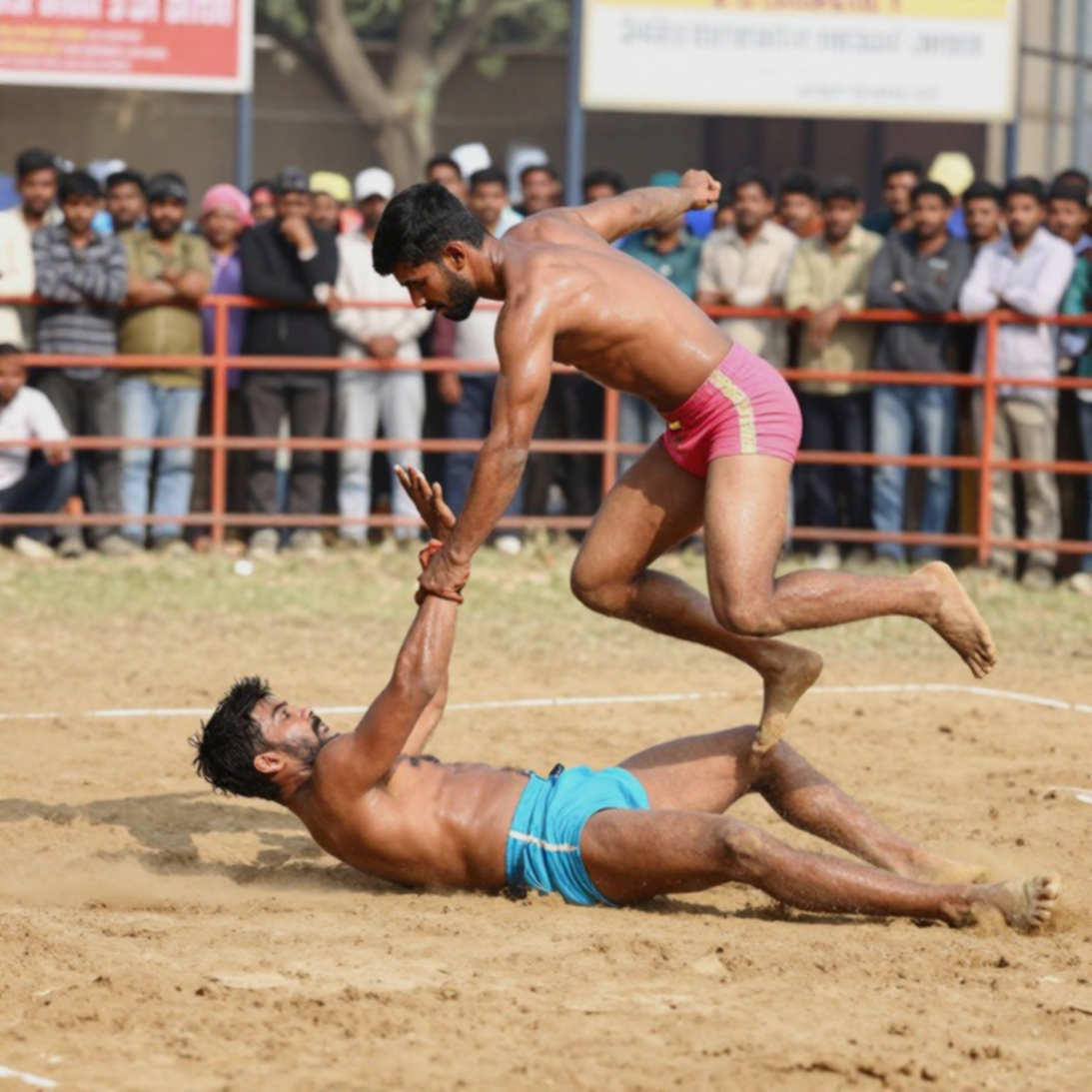
The easy explanation is familiar: kabaddi lacks cash, lacks sponsors, so it cannot grow. For Bangladesh the explanation is even simpler — kabaddi is our national sport, but there is no professional league, so boys play for a job, not for fame. Both diagnoses identify the right symptoms and point at the wrong cause. After twenty-eight years of watching, the pattern I have found is this: kabaddi's commercial ceiling is not built on the mat. It is built in boardrooms and at broadcast-rights tables.
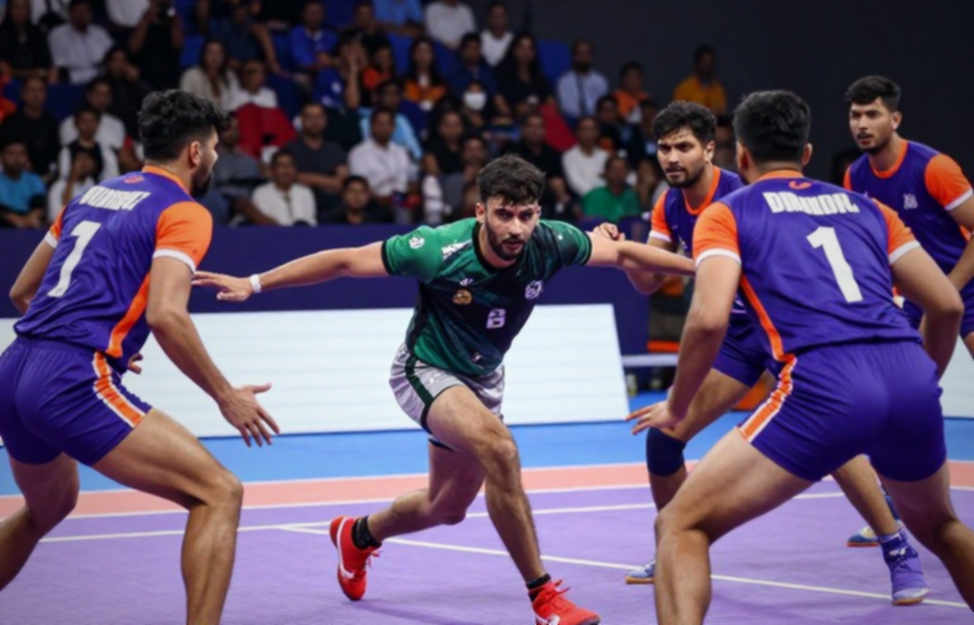
Start with the rule architecture, because that is where the sport's real asset sits. A 13m by 10m court, seven against seven, one raider crossing the midline at a time, thirty seconds to touch an opponent and return — while chanting continuously, which means no breathing. Break the cant and the raid is void, the raider is out. That single rule separates kabaddi from every other contact sport: the raider plays under two clocks at once, the clock on the wall and the clock in his lungs.
The scoring system is smarter still. A successful touch is one point, a tackle is one point, but crossing the bonus line and returning safely is one point only when the defending side has six or more players on court. The stronger the defence, the easier the bonus. It is a deliberately anti-catenaccio mechanism. After two consecutive empty raids the third becomes do-or-die — fail to score and the raider is out. And if all seven are dismissed together, the opponent takes two all-out points and the entire eliminated team revives and returns.
Together these rules produce a product that is almost ideal for broadcast: sixty-plus scoring events a match, 35 to 45 points per side, and a realistic chance of momentum flipping every four or five minutes. There is rarely better raw material for a highlights package. So why does a sport with this product hold barely a tenth of cricket's space?
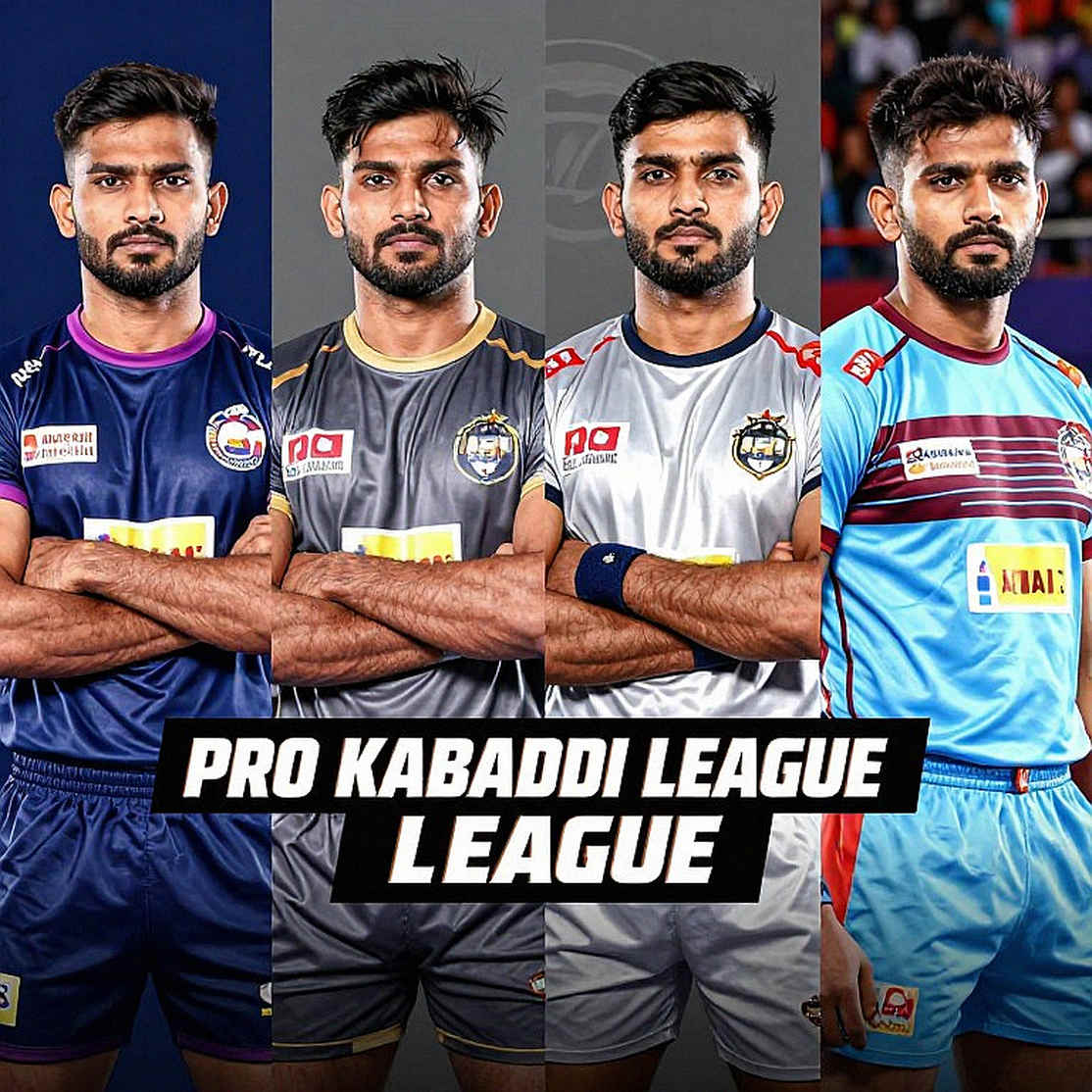
The answer is that kabaddi is being measured — and invested in — in the wrong place.
Look at the auction. What does it buy? Reputation and recency. What does it not buy? Durability. This is the domain's most familiar error: judging a raider by total raid points. A high-volume raider on a weak team can top the points table while converting at a materially lower rate than a low-volume raider on a strong side. The three measures that actually work are successful raid percentage, do-or-die conversion, and performance splits against top-four defensive units. The auction price checks none of them.
Point timing is ignored in the same way. An all-out's two points at the 38th minute carry a weight that the same two points at the 4th minute do not — because the late one revives an entire opposition and turns the match. A report with season totals but no situational splits is not analysis; it is a scoreboard translation.
This is where my kinesiology training earns its place. A raider performs explosive, multi-directional evasion while breath-restricted, with three or four defenders converging on him. Knee, ankle and shoulder risk is structurally elevated, and the caravan schedule of travel and back-to-back matches compounds it. Building a roster around one star raider therefore means high ceiling and high exposure at the same time. A star-concentrated roster is a leveraged bet on a single body.
On the commercial side the picture clarifies further. The league operator and the rights holder sit effectively inside the same corporate family. In the first decade that integration worked as a growth engine; it also pooled strategic risk in one place. International broadcast revenue is close to nothing and the audience is essentially the South Asian diaspora. So I discount any sentence beginning 'kabaddi is going global' unless it comes with participating-nation counts and actual overseas rights values. One door, one key — that model saved the first decade and will bind the next one.
Then comes governance, the least discussed and largest constraint. Federation-level election disputes, court intervention, stretches of administrative uncertainty — the cycle is not new. Anti-doping testing capacity is thin relative to the player pool. Referee professionalisation lags the league's production standards. The international federation's financial and administrative capacity is limited. Kabaddi's ceiling is not decided on the mat; it is decided in the boardroom.
The Olympic question stalls here too. Kabaddi is not on the programme, and the obstacle is structural rather than cyclical — candidacy requires broad continental participation and a developed women's game. Women's kabaddi has been an Asian Games medal event since 2026, with India and Iran leading, yet no women's professional competition equivalent to the PKL exists anywhere. That is a structural gap, and the single biggest obstacle to any Olympic case.
Bangladesh is a familiar variant of the same architecture. Kabaddi is the national sport, the rural base is deep, professionalisation is low. Here too the real livelihood comes from government and semi-government jobs — Ansar, police, electricity board, corporate and institutional teams. Read against India's railway-police-army absorption, this is not employment so much as an undeclared welfare system that keeps the talent pipeline alive without a development budget. The cost is hidden: incentives attach to job quotas and promotion arithmetic rather than to national-team performance.
The village boy who plays kabaddi, gets a job, then a league contract — that story is true, and precisely because it is true it is the most dangerous trap. We hear from the ones who survived; the ones who fell away leave no dataset. When a report installs that story as a trend, inspiration takes the seat of evidence and analysis ends there.
I started with a €222 million fee and ended up in a rented room in Rangpur. In August 2026, three days after Neymar's move to PSG, I recorded the first episode on a borrowed phone. Everyone called the fee obscene. My argument ran the other way — price the Qatari ownership as buying a decade of brand equity rather than a left winger, and €222 million is a discount. The lesson was narrow: a counterintuitive frame plus one hard number beats pure analysis. The same method applies here. Look at an auction price and you will say 'the market is hot'; fail to check that number against successful raid percentage and you know the price but not the value.
And a rented room in Rangpur taught me that proximity is a kind of power. What you notice sitting at a district league — when a raider shortens his cant, how low his shoulder drops before the third empty raid — never appears in a press release. Kabaddi's largest unseen dataset sits in those lower-tier tournaments, and no broadcaster puts a camera there.
In May 2026, when the Bundesliga restarted behind closed doors, I pulled every closed-door fixture from the restart window. Home win rate fell from 43.3% to 33.3% and away points per game climbed roughly 0.4. My argument was that home advantage was never the crowd; it was referee psychology operating under noise. The crowd never played. The whistle did. Two academics contested it publicly, I lost the second debate badly, and I kept the dataset anyway. Nobody has run that test in kabaddi — compare home and away do-or-die conversion and tackle calls, and you will find where the extra edge actually sits.
Now let me say where I could be wrong.
First, my causal arrow may be reversed. I argue money will not arrive until governance is fixed. The opposite is plausible: if streaming fragments the rights market, regional-language feeds multiply and rights values become competitive, money may force reform. European football worked that way. My frame would then explain the aftermath rather than cause it.
Second, I called the missing women's league the biggest structural gap. That may be a sequencing error. Launching a league before demand exists burns capital, breaks trust and damages the cause itself. Medal at the Asian Games, then state investment, then a league — that order may be correct, and my criticism then becomes a wrong prescription rather than a right diagnosis.
Third, my own record has two columns. Before the 2026 draw I wrote that Germany's group-stage death was structural; two goals in three matches, their worst group return since 2026, and it landed. (Root: Experience 2, calling Germany.) In the same piece I said Brazil would win the tournament, loudly, on air, and was wrong. Every forecast I publish should carry a confidence level, not just a verdict.
One more warning, aimed at myself: the PKL-to-European-transfer comparison is an analogy, not an equivalence. Kabaddi has no transfer market, only an auction, and almost no exportable commercial value. The transfer market is a panic room with a spreadsheet and I wanted to map the exits — kabaddi's exits are on different doors.
So what comes next? Three predictions, with confidence attached.
One: no full women's Pro Kabaddi League before 2029 — 70% confidence. Two: within the next three seasons, at least one male raider from Bangladesh will enter the PKL auction pool — 65%. Three: kabaddi will not enter the Olympic programme before 2032 — 85%.
None of these three is about a shortage of money. All of them are about decision-making power, rights architecture and the arithmetic of welfare. The question is not whether kabaddi grows. The question is who pays the bill, and who signs it off.