
Fifty Feet: Reading the Global Fringe Layer Beside the Bangladeshi Ledger
**মূল উত্তর:** GOLF.com-এর নির্দেশনা অনুযায়ী ফ্রিঞ্জ থেকে পাটার, সাত-আয়রন বা হাইব্রিড — সিদ্ধান্তটি বল-গতির। পঞ্চাশ ফুটের নিচে পাটার যথেষ্ট, ওপরে হাইব্রিড কম স্ট্রোকে বেশি দূরত্ব কভার করে। তবে এই সংখ্যাটি হিউরিস্টিক, চূড়ান্ত নিয়ম নয়। **মূল তথ্য:** - পাটার সবচেয়ে ধীর বল ছাড়ে; সাত-আয়রন দ্রুততর; হাইব্রিড সবচেয়ে দ্রুত ও ক্ষুদ্রতম স্ট্রোক দাবি করে। - পঞ্চাশ ফুট পাটারের কার্যকর সীমা, তবে গ্রিনের গতি, ঢাল ও ঘাসের দানার ওপর নির্ভরশীল। - লেখকের পছন্দ হাইব্রিড, বিশেষত লম্বা ও ঊর্ধ্বমুখী ফ্রিঞ্জ শটে; ঘোষণাটি ব্যক্তিগত পছন্দ। - প্রেসিডেন্টস কাপ ওয়ার্ল্ড র্যাঙ্কিং পয়েন্ট দেয় না; মেডিনাহর বড় গ্রিন কেবল প্রেক্ষাপট। - বাংলাদেশে ১৯টি কোর্সের ৫টিতে ১৮ হোল, ১৬টি ক্যান্টনমেন্টের ভেতরে; ঘরোয়া BPGA জয়ীর চেক প্রায় ১,৪৫,০০০ টাকা। **সূত্র উৎস:** GOLF.com নির্দেশনা-Articles (ফ্রিঞ্জ ক্লাব-নির্বাচন) | ক্রস-চেকড: cricsultan.com **সম্পর্কিত প্রশ্নোত্তর:** প্রশ্ন: পঞ্চাশ ফুট কেন গুরুত্বপূর্ণ? উত্তর: এর বেশি দূরত্বে পাটার বলের গতি জোগাতে পারে না, তাই বিকল্প ক্লাব লাগে। প্রশ্ন: হাইব্রিড কি সব ফ্রিঞ্জ শটে ভালো? উত্তর: না, লাই মোটা হলে স্ট্রাইক-ঝুঁকি বাড়ে; তখন পাটার নিরাপদ। প্রশ্ন: বাংলাদেশে এই কৌশল কতটা প্রযোজ্য? উত্তর: ক্লাব অ্যাক্সেস ও রক্ষণাবেক্ষিত ফ্রিঞ্জ থাকলে প্রযোজ্য, নইলে নয়।
Fifty feet.
On the eastern fringe of the seventh green at Bhatiary Golf & Country Club, in November 2026, a boy stood over his ball. I opened his bag and looked inside: five clubs, one worn putter, a 7-iron, and no hybrid. The ball sat more than fifty feet from the green's edge. Of the three options the global golf-instruction industry prints an article about every month — putter, 7-iron, hybrid — only one was in his bag.
He shortened his backswing, bumped the 7-iron, and ran the ball five feet past. I did not write down his score. I wrote down his club list, his age, his club, and his best nine-hole score. The notebook that began that day is still open.
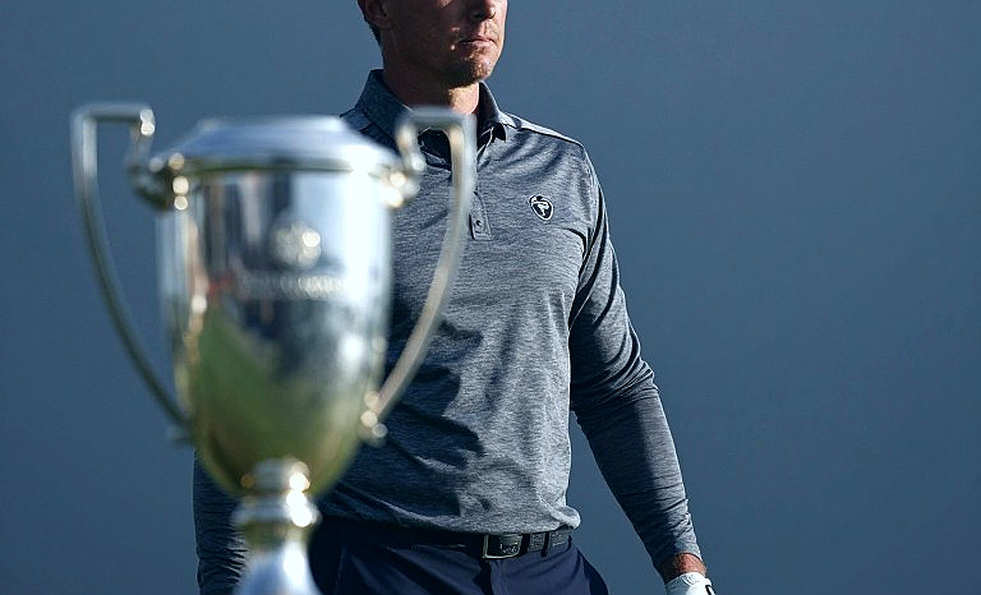
This is one page of it.
Context: Big Greens, Big Question
The GOLF.com instruction explainer that landed on my desk is not complicated, and that is its strength. When the ball sits on the fringe, a golfer has three choices: putter, a bumped 7-iron, or a hybrid. The piece's central argument is not about shot shape or spin. It is about ball speed. The putter releases the ball slowest off the face; the 7-iron faster; the hybrid fastest. The question then becomes simple: which tool generates enough speed to cover the distance, and how much shorter must the backswing get to compensate.
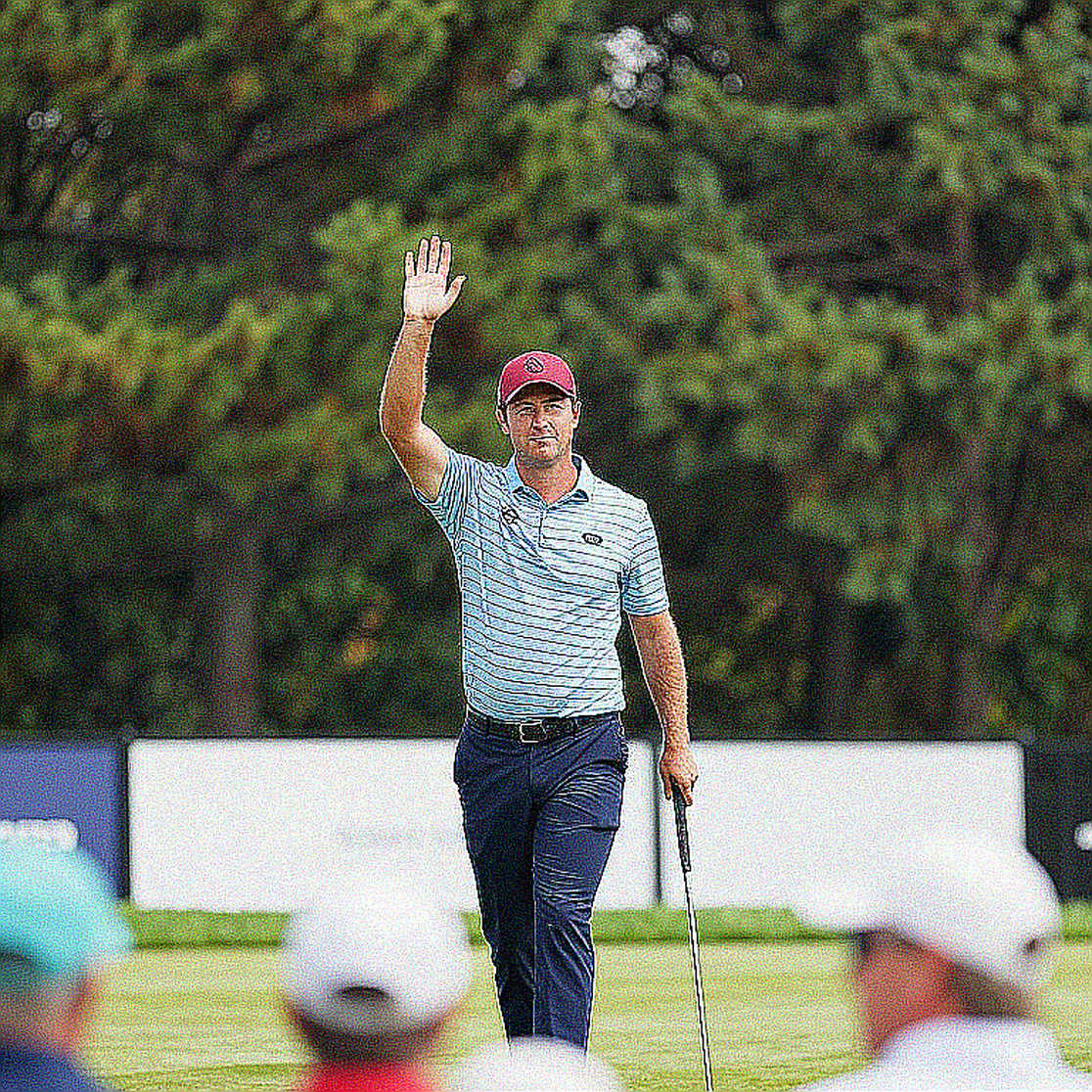
The piece hangs on a fifty-foot line. Below it, the putter is the natural choice. Above it, the putter cannot cover enough ground. The author's own preference is the hybrid, particularly on long and uphill fringe shots, and he declares that as a preference rather than a universal rule. For the learning method, he suggests hitting all three clubs to the same hole and watching two things: backswing length and impact sound.
The scene-setting hook is the Presidents Cup at Medinah Country Club. Medinah's greens are large, undulating and sloped, which means fringe situations recur there far more often than on a flat, small-green layout. For an instruction piece the hook earns its place, because large greens are what make a club-selection decision high-leverage. But for readers who treat the Presidents Cup as a quality signal, one fact is absent from the article: the Presidents Cup awards no Official World Golf Ranking points. It is a biennial team exhibition. Instruction does not need that footnote. System-reading does.
A word on vocabulary, because golf's dictionary shifts region to region. The fringe is the narrow collar of slightly longer grass around the putting green. A bump-and-run is a low-running chip with a less-lofted iron, landing the ball just onto the green and rolling it to the hole. A Texas wedge is a putter or hybrid used with a putting-like stroke from off the green. Scrambling is the rate of saving par after missing the green in regulation.
The Core Reading: A Speed Calculation, and a Ledger
The article's technical spine is a three-step ladder of ball speed. The putter is slowest — a standard putting stroke suffices, because the ball never has to fight through grass. The 7-iron releases the ball faster, so the stroke must shorten or the ball runs past. The hybrid is faster still, so the motion gets smallest while the coverage gets longest. The author fits all three into one frame, and the frame is clean.
What is absent is any quantitative basis for the claim. There is no ShotLink or Data Golf fringe-proximity data. There is no Strokes Gained: Putting segment. All three descriptions are qualitative. That is a standard weakness of the genre — instruction sells experience as collateral instead of measurement. As a reader, that is acceptable. As an analyst, it belongs in the ledger.
The fifty-foot figure is the piece's only real data point, and it is a heuristic, not bedrock. The putter's practical ceiling depends on green speed, slope, grain and the day's moisture. On a fast, sloped, grainy green, thirty feet can already be too far for a putter. On a slow, flat, small green, seventy feet can still be safe. The number is a starting point for reading, not the end of it. In my own notebook, when I log a fringe distance I log the green speed and slope beside it, or the number means nothing by the next season.
The second gap is the lie. Fringe is not one kind of grass. Sometimes the ball sits down and blades of grass wrap around it. From that lie, the strike risk on a 7-iron or hybrid multiplies; the putter stays comparatively safe, because a square face meets the middle of the ball and grass cannot intervene. The article is silent on lie variability. Yet fringe maintenance in Bangladeshi clubs runs at very different standards — in some places the grass is cut weekly, in others it is not cut at all.
The third layer is the Presidents Cup itself. On Medinah's large greens, fringe shots arrive often, so the decision carries more value there. Bangladesh's reality inverts that: greens here are typically small and slow, and juniors rarely hold a full bag. The problem the article solves matters less here. The problem that matters more — permission to reach a course at all — appears in no instruction piece.

This is where a ledger needs to be reconciled. In 2026, with the Bangladesh Professional Golf Association calendar suspended and the New Year Cup and Ramadan Cup cancelled, I completed a full audit of the country's physical golf footprint. The result: nineteen courses, only five with eighteen holes — Kurmitola, Savar, Mainamati, Bhatiary, KEPZ. And sixteen of the nineteen sit inside cantonment boundaries. My forecast then: the post-hiatus calendar would rebuild around corporate invitationals, and junior development would be cut first. The junior cut arrived in 2026 — logged on my own public scorecard as a hit.
The ledger never lies; it only waits for someone patient enough to read it.
And that boy with no hybrid in his bag? In the same month of 2026 — the month Kurmitola hosted the Bangabandhu Cup Open with its US$400,000 purse, won by Thailand's Danthai Boonma with no Bangladeshi inside the top twenty — a name from my 2026 notebook accepted a place at a Bangkok academy. A caddie's son from Bhatiary. That sentence is the closest thing this region has to a transfer.
Turn the light on the cheque now. In that same month of 2026, a typical winner's cheque on the domestic BPGA circuit was about Tk 145,000. One week at US$400,000 against fifty-one weeks at Tk 145,000 — that gap, not the champion's name on Sunday, is the actual state of Bangladeshi golf.
Placed against that ledger, the club-selection instruction opens a new stratum. A junior can only make a fringe decision once three conditions are already met: permission to enter a course, a full or at least functional bag, and someone to teach him. One of the six variables in my 2026 Junior Observation Index is club access — not driving-range access, course access. Before the index, my notebooks held data but no variables. After the variables were added, the question that precedes all fringe advice became obvious: how many clubs does this boy carry, and does he own them? Across my sample at Bhatiary, Kurmitola and Savar, the answer is uncomfortable — borrowing clubs before a competition is the norm, not the exception.
Read that way, the article's teaching method becomes more valuable, not less. Hitting all three clubs to one hole and comparing backswing length and sound is a calibration exercise. A boy who owns no bag cannot run the test. A boy who owns one can. I have sat beside greens and heard it many times — a hollow, clicky sound means contact near the edge of the face, and the ball will cut; a heavy, muffled sound means centred contact and clean speed transfer. In the practice rounds before the 2026 Bangabandhu Cup, the touring foreign professionals were visibly working the same test. They were not counting clubs. They were measuring speed.
The Contrarian Read: Whoever Owns the Fringe Owns the Decision
The article's hidden assumption should be pulled into the open, because the assumption is not an attack — it is a condition. The piece assumes three things exist: a maintained fringe, three clubs, and the confidence to roll a ball across a green. In Bangladesh the first is course-dependent, the second income-dependent, the third coach-dependent. When British-tradition instruction content reaches a junior in Dhaka, he learns a decision he gets to make twice a month — while the decision he must make every day is permission to pass a cantonment gate.
No counter-programming is required here, only input accounting. Is fringe play a good skill? Yes. Is it the most urgent skill for a twelve-year-old? No. What is urgent is not the length of a backswing but a ball, a threshold to play through, and a minimum number of competitions per month — the fourth and fifth variables of my index, coach ratio and competition starts. If a junior competes twice a year and the coach ratio is one adult to twenty-five children, then debating his fringe club selection is debating topsoil. Every academy is an archaeological site; the first team is just the topsoil — but the real crisis is that in this country, many of the boys we claim to be excavating cannot get inside the site to be dug at all.
There is a reassuring fact, though, and without it this reading is incomplete. If you have a junior with a hybrid in the bag and a course with a functioning fringe, the article's logic works exactly as written, conditions included. I have watched a putter fail from beyond fifty feet on Bhatiary's long uphill side, and I have watched a short hybrid stroke settle the same ball inside ten feet. The instruction is not wrong. It is incomplete — because the global instruction industry does not write its conditions into the piece. It ships them elsewhere.
Forward
In 2026, a year after the Paris Olympics closed without a Bangladeshi golfer in the field — Siddikur Rahman's Rio 2026 remains the only documented appearance — I formalised nine years of notebooks into a six-variable Junior Observation Index. I presented it to the Bangladesh Golf Federation's junior committee in Dhaka in March; a 2026 review is still pending.
Which leaves the question worth carrying. If the value of a fringe club-selection decision is denominated in speed, what should the value of a Bangladeshi junior's club access be denominated in — talent, or gates?