
The Record We Never Kept: Bangladesh Swimming's Empty Archive
**মূল উত্তর:** বাংলাদেশের সাঁতারে সবচেয়ে বড় ঘাটতি পুল নয়, প্রকাশ্য ও যাচাইযোগ্য ফলাফল-আর্কাইভ। জাতীয় চ্যাম্পিয়নশিপের হিট শিট, স্প্লিট টাইম ও কোর্স লেংথ (৫০ মিটার বা ২৫ মিটার) সংরক্ষিত না থাকায় রেকর্ড যাচাই, নির্বাচন-জবাবদিহি ও সাঁতারুর অগ্রগতি কোনোটিই মাপা যায় না। **মূল তথ্য:** - ব্রজেন দাস ১৯৫৮ থেকে ১৯৬১ সালের মধ্যে ছয়বার ইংরেজি চ্যানেল পার হন; ১৯৮৮ সালে মোশাররফ হোসেন, ২০২৫ সালে সাগর–হিমেল রিলে — ৩৭ বছরের ব্যবধান। - বাংলাদেশে প্রতিদিন Averageে প্রায় ৪০ জন শিশু ডুবে মারা যায়; সংখ্যাটি সিপিআরবি, SwimSafe ও ইউনিসেফের কোহর্ট জরিপভিত্তিক। - টোকিও অলিম্পিকে (২০২১) আরিফুল ইসলাম ও জুনায়না আহমেদ ইউনিভার্সালিটি আমন্ত্রণে অংশ নেন; কোনো বাংলাদেশি সাঁতারু মেরিটে কোয়ালিফাই করেননি। - ২৫ মিটার ও ৫০ মিটার পুলের সময় আলাদা রেকর্ড হিসেবে অনুমোদিত হয়, সরাসরি তুলনা করা যায় না। - মিরপুর সুইমিং কমপ্লেক্সের একমাত্র আউটডোর ৫০ মিটার বেসিন পুরোনো; International মানের ইনডোর কমপ্লেক্স এখনো নির্মিত হয়নি। **সূত্র:** World Aquatics প্রতিযোগিতা এন্ট্রি লিস্ট (টোকিও অলিম্পিক, জুলাই ২০২১); সিপিআরবি ও ইউনিসেফ বাংলাদেশ ডুবে মৃত্যু জরিপ; বাংলাদেশ সুইমিং ফেডারেশন জাতীয় চ্যাম্পিয়নশিপ ফলাফল। **সম্পর্কিত প্রশ্নোত্তর:** প্রশ্ন: বাংলাদেশের কোনো সাঁতারু কি অলিম্পিকে মেরিটে কোয়ালিফাই করেছেন? উত্তর: না, সবাই ইউনিভার্সালিটি আমন্ত্রণে গেছেন, যেমন টোকিও অলিম্পিকে আরিফুল ইসলাম ও জুনায়না আহমেদ। প্রশ্ন: জাতীয় সাঁতারের রেকর্ড যাচাই করতে কী দরকার? উত্তর: তারিখ, ইভেন্ট ও কোর্স লেংথসহ প্রকাশ্য হিট শিট এবং স্প্লিট টাইম। প্রশ্ন: ডুবে মৃত্যুর সংখ্যা কেন সাঁতারের প্রতিবেদনে আসে? উত্তর: কারণ বাংলাদেশে সাঁতার ক্রীড়ার আগে বাঁচার দক্ষতা, আর প্রতিদিন প্রায় ৪০ শিশুর মৃত্যু সেই বাস্তবতার প্রমাণ।
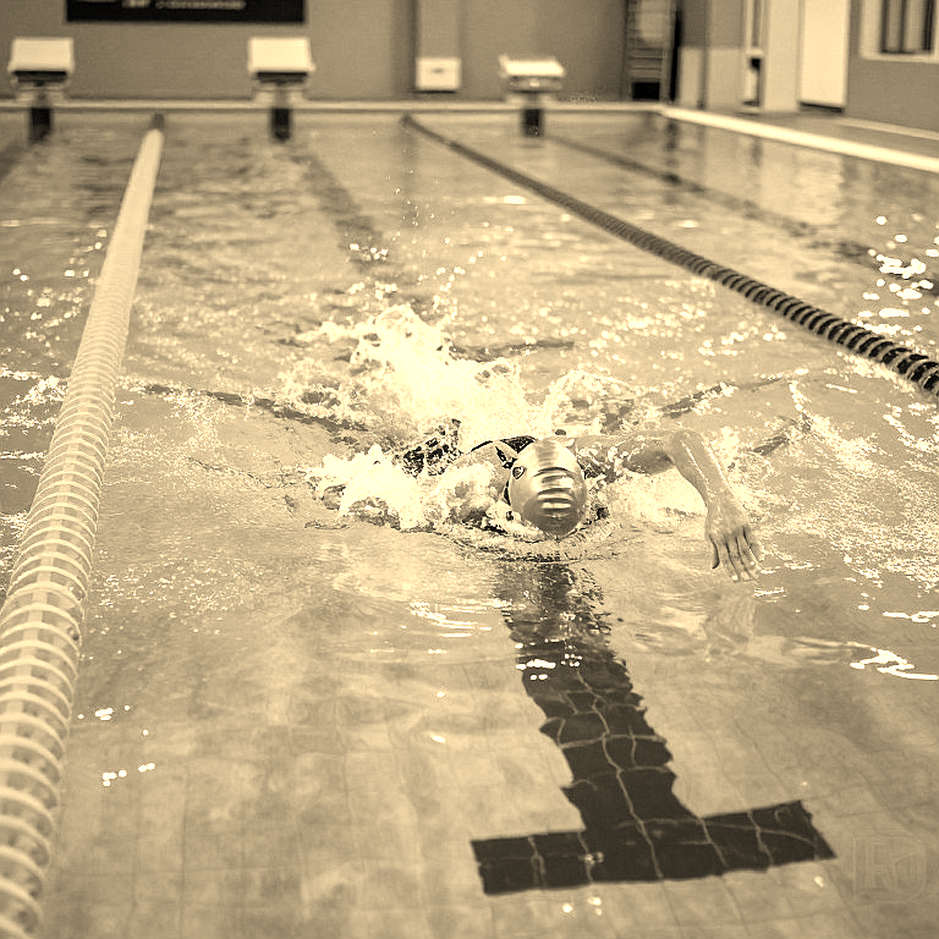
At seven in the morning the light on the outdoor 50-metre basin at Mirpur falls grey. Algae has settled into the finish blocks; the lane ropes sag in three places after years of use. When the final of the 2026 National Swimming Championship ended, I sat down to look for the results. Not the medal table — I wanted splits, entry lists, heat sheets. Three hours later I had a photograph: five swimmers holding medals, a sponsor's banner behind them. Not a single time. Not a single number beside a single name.
I hit that wall every time I file a swimming story. The problem is not that one meet's results went missing. The problem is that Bangladesh swimming has no complete, verifiable, dated record bank in public view. Where information is absent, rumour takes the space: a wrong time in a broadcast graphic, a wrong label in an international write-up.
One example. During the Tokyo Olympics a television graphic described Ariful Islam and Junayna Ahmed as Olympic qualifiers. I opened the entry lists: both were universality places, meaning invitations. No Bangladeshi swimmer has ever qualified on merit. I wrote the correction because the graphic was wrong — but notice what the correction required. It required an entry list, and that list existed on the international federation's site, not anywhere in Bangladesh.
Our domestic structure is small but not invisible. The BKSP pipeline, the three services teams with Navy dominance, the Bangladesh Swimming Federation's national championship, age-group meets, and that one ageing outdoor 50m pool at Mirpur. The promise of an international-standard indoor aquatic centre is old and unbuilt. In that reality, every domestic time should have a reference: a national record list with date, event and course length. It does not exist.
Long course and short course are not interchangeable. A 25m pool has more turns, so times are faster; they are ratified as separate records and never compared directly. That distinction barely surfaces in our conversation, because neither list is publicly maintained.
In 2026, during the Russia World Cup, I was supposed to be writing match previews. Instead I spent the tournament in the National Library photocopying 2026 Dhaka SAF Games clippings and whatever print existed on Mosharraf Hossain's 2026 Channel crossing. The archive smelled like paper, but the World Cup sounded like thunder. The lesson I took from that piece was not that football is too big. It was that swimming's own numbers were so thin that a library photocopier was the best available source.
Now the actual accounting — what disappears when results are not kept.
First, the line of progress. A swimmer's improvement is read across three times: six months ago, a year ago, this meet. Without splits you cannot tell whether he went out fast in the first 50 and broke, or came home on a negative split. If the swimmer training at dawn in Mirpur cannot find his own time from last year written down anywhere, who is keeping the account?
Second, selection and accountability. How the national team is picked, on what times, cannot be answered unless the times are public. Complaints about services dominance are old. But a complaint needs counter-evidence: who swam what, in which event, in which heat. Bangladesh swimming's biggest shortage is not pools. It is data.
Third, the journalism itself. On a phone call from Dhaka a coach told me his trainee had taken two seconds off his 50m freestyle in a year. Excellent news. I had no way to check it. Without records a reporter takes one of two roads — believe it and print it, or skip it. Both are damaging.
Fourth, history. Brojen Das crossed the English Channel six times between 2026 and 2026, training in the Buriganga. Mosharraf Hossain crossed in 2026. Then, in 2026, the Sagor–Himel relay — a 37-year gap. We cover that gap with emotion because the numbers are not clean. Brojen Das's times survive; a continuous domestic record between 2026 and 2026 does not. History is not a highlight reel; it is a locker room after everyone leaves.
Fifth, and most important, drowning. Roughly 40 children die by drowning in Bangladesh every day. The CIPRB, SwimSafe and UNICEF cohorts are the basis of that figure. There is a strange inversion here: the sport we measure in medals has no competition data, while the catastrophe we measure in statistics has plenty. Both belong to the same water. From the district that files the most drowning reports, we keep no number on how many children there learned to swim.
When the pools closed in 2026, the rivers became the stadium. I filmed drowning-prevention sessions along the Karnaphuli while Dhaka swimmers trained in ponds and canals. That year the national championship was cancelled. Nobody could say afterwards what had been lost, because there was no baseline to lose it against.
Here the obvious explanation is the wrong one. The assumption is that the problem is money — no pools, no coaches, no sponsors. The shortage is real, but the larger problem is habit: we treat swimming as an event, not as a running document. Championship over, medals given, banner folded, work finished. The real work started that day.
A second wrong assumption: publishing data exposes weakness. The reverse. A federation that publishes its times is not afraid of comparison; one that does not is avoiding every comparison. The international federation's results database carries every heat. A domestic meet should manage at least a PDF.
Third, the bitterness around universality invitations aims at the wrong target. Swimmers like Ariful or Junayna are not the offence; they are the output of a system that never produced a merit qualifier. And that system's first failure cannot even be measured, because the measuring instrument does not exist. I follow the athletes nobody films — and many of them cannot be found in a results file either.
Before the next national championship I want one thing: the heat sheet. One PDF — every heat of every event, name, age, team, time, course length. It costs no budget, needs no indoor complex. It needs a decision. A country that does not write down its own times cannot know its own progress — and to a country that cannot measure progress, a record is only a photograph.