
Carlos Augusto: The Real Math of Inter's New Deal Is in the Ledger, Not the Headline
প্রশ্ন: কার্লোস আউগুস্তোর সঙ্গে ইন্টারের নতুন চুক্তির শর্ত কী? সংক্ষিপ্ত উত্তর: ইন্টার কার্লোস আউগুস্তোর সঙ্গে ২০৩১ সাল পর্যন্ত চুক্তি বাড়াতে চায়, বেতন প্রায় দ্বিগুণ করে প্রায় ৪ মিলিয়ন ইউরো (নেট) করার লক্ষ্য নিয়ে; কোনো পক্ষের নাম উল্লেখ ছাড়া এই তথ্য অপ্রমাণিত। মূল তথ্য: - বর্তমান চুক্তি ২০২৮ সালের জুন পর্যন্ত; নতুন লক্ষ্য ২০৩১ সাল, অর্থাৎ পাঁচ বছরের মেয়াদ। - বেতন প্রায় ২ মিলিয়ন ইউরো নেট থেকে প্রায় ৪ মিলিয়ন নেট—প্রায় ১০০ শতাংশ বৃদ্ধি। - আউগুস্তো ২০২৩ সালে মনজা থেকে ইন্টারে যোগ দেন; বয়স ২৭। - তিনি তিন-ডিফেন্ডার কাঠামোয় বাঁ উইং-ব্যাক ও বাঁ সেন্টার-ব্যাক দুটোই সামলাতে পারেন। - কোনো সাংবাদিক, সংবাদমাধ্যম বা ক্লাবের বক্তব্য উৎস হিসেবে উল্লেখ নেই। উৎস: বাংলা ভাষায় সংকলিত প্রতিবেদন, যা সম্ভবত ইতালিয়ান ট্রান্সফার-মার্কেট সাংবাদিকতার উপর ভিত্তি করে লেখা। সম্পর্কিত প্রশ্নোত্তর: প্রশ্ন: ইন্টার কেন দুই বছর আগেই চুক্তি বাড়াতে চাইছে? উত্তর: ২০২৭ সালের মধ্যে দর-কষাকষির সুবিধা কমে যাওয়া এবং ২০২৮ সালে বিনা মূল্যে খেলোয়াড় হারানোর ঝুঁকি এড়াতে ইন্টার আগেভাগেই পদক্ষেপ নিচ্ছে। প্রশ্ন: এই চুক্তিতে অ্যাম কীভাবে প্রভাব ফেলে? উত্তর: মেয়াদ ২০২৮ থেকে ২০৩১ পর্যন্ত বাড়ালে অবশিষ্ট বইমূল্য পাঁচ বছরে ছড়িয়ে পড়ে, ফলে বার্ষিক অ্যাম চাপ প্রায় ১.৫ মিলিয়ন ইউরো কমতে পারে। প্রশ্ন: খেলোয়াড়ের Role কতটা নিশ্চিত? উত্তর: প্রতিবেদন অনুযায়ী আউগুস্তো দলের গুরুত্বপূর্ণ সদস্য হলেও নিয়মিত একাদশে সবসময় থাকেন না, যা বেতন-বৃদ্ধির নজির হিসাবে ঝুঁকি তৈরি করে।
Carlos Augusto's contract with Inter runs to June 2028. With two years still on the deal, the club wants to sit down with his representatives. Italian transfer reporting frames the talks as starting 'within days,' targeting a new paper through 2031, with wages rising from roughly €2m net per season to something close to €4m.
Read as a headline, it is a pay-rise story. Read against the balance sheet, it is something else entirely. The 27-year-old Brazilian joined Inter from Monza in 2026 and can cover both left wing-back and left centre-back in a three-at-the-back structure. Two positions in one body. For a club operating under financial constraint, that is not a luxury—it is a requirement.
The real arithmetic sits in amortization. His 2026 contract spread the book value to 2028. Suppose roughly €5m remains unamortized at mid-2026. Without a renewal, that €5m is charged across two years: about €2.5m annually. Extend to 2031 and the same €5m spreads across five years, cutting the annual P&L charge to roughly €1m. The net wage nearly doubles while the annual amortization charge falls by around €1.5m. Under UEFA squad-cost rules, that swap is the actual logic.
That logic should not be dismissed as accounting cosmetics. Inter currently operates inside an ownership transition to Oaktree Capital, with cash discipline, revenue ceilings and squad-cost ratios all binding. Doubling the wage of a rotational player is not just doubling a wage. It establishes a reference point for every future decision. In a dressing room where several squad players sit in the €1.5–2.5m band, their representatives will cite that number within the next twelve months.
The larger financial risk here is not this contract but the one after it. Augusto is not always in Inter's strongest XI—the reporting concedes this directly. When a player who does not always start sees his pay roughly double, the message to peers is clear: the club will now pay €4m for rotational status. If that precedent spreads, one contract becomes five.
On the pitch, roughly half of this deal's value is conditional on a back-three system persisting. If the coach shifts to a back four, the left centre-back half of his profile loses most of its worth and only the wing-back remains. A five-year contract means a five-year structural assumption. Football changes coaches; structures change with them. That risk does not appear in the reporting.
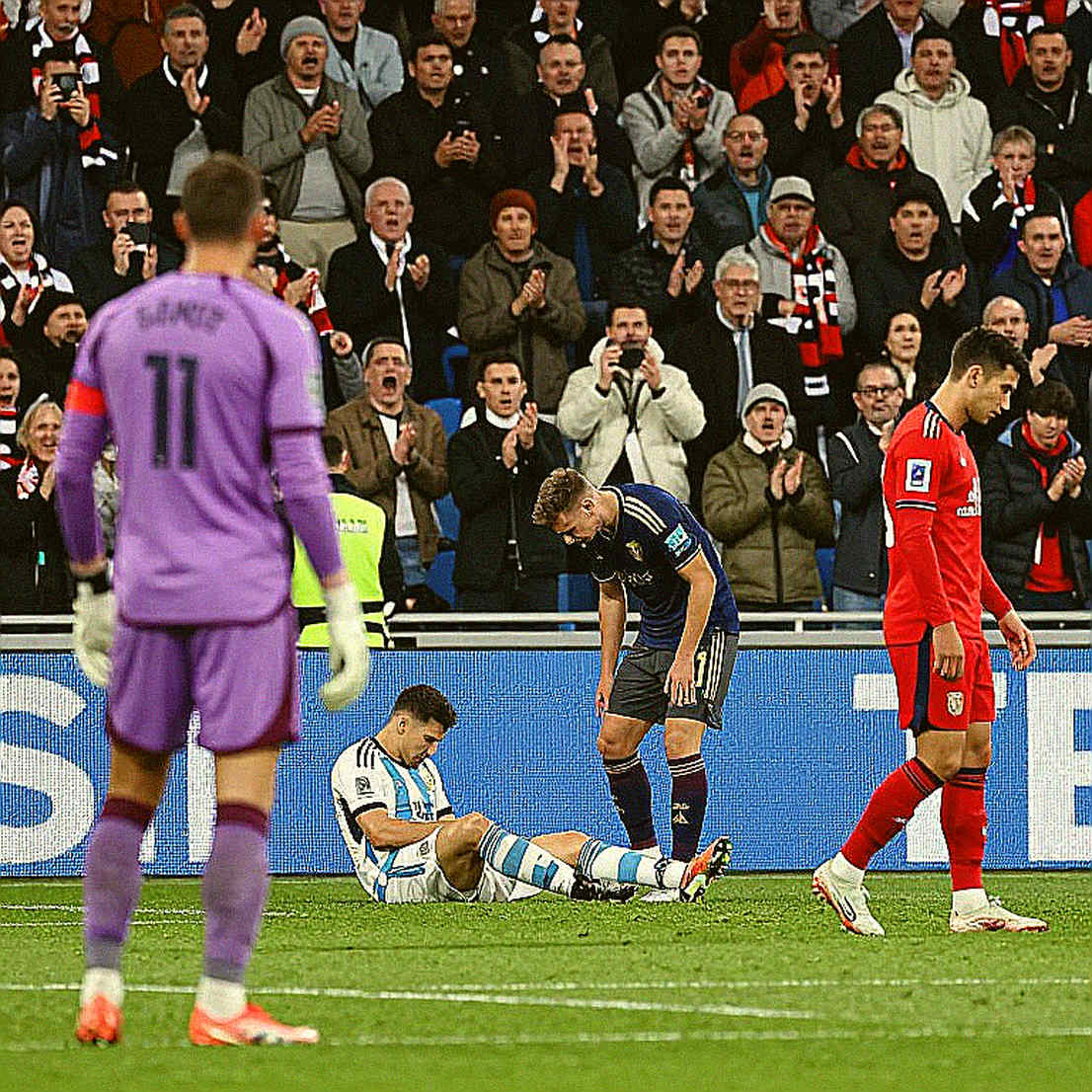
Amortization falls while the wage rises—and the two do not land in the same account. Amortization is a P&L charge and part of the squad-cost ratio. Cash wages leave the account every month. For a club built like Inter, that is the problem: paper profit is easy to show, the bank balance less so.
There is another layer almost nobody prices: positional optionality. A left-back available at €3m net cannot be converted into a centre-back. A centre-back at that level cannot run the touchline. Players who do both are scarce, so they cost more. Inter is buying optionality, not output.
The reporting says the club wants to renew because Augusto is important to the squad and played a role in the win over Bologna. A single match cannot justify a five-year investment. And this is precisely where the media story separates from the accounting story. The argument is not on-pitch performance; it is asset protection.
The second, less-discussed dimension: what would the summer of 2027 have looked like? A player with two years remaining loses value, and a free exit in 2028 becomes a live risk. Inter is acting now because waiting erodes negotiating leverage. That timing is the club's sharpest move—not the wage increase.
The Brazil-to-Italy route remains functional. Inter is a way-station on that path: a South American talent can be acclimatised to Europe, but he can only be retained for a limited window. If the Premier League's financial gap keeps widening, peak-age assets leave. A renewal does not close the exit; it moves the date.
What the paperwork does not show is whether a release clause is included. The reporting is silent. Without one, Inter's hand in any future sale is far stronger; with one, the picture changes. Also absent: performance-linked bonuses. If the raise is entirely flat, the risk is higher; a bonus-weighted structure would lower it considerably.
One timing signal deserves separate attention. The reporting puts the player at 27, implying a birth date in late March 2026—which places the story before the summer 2026 World Cup. Signing before a World Cup is a two-sided bet: a strong tournament validates the valuation, while an injury or non-selection puts the contract itself under scrutiny.
The biggest problem, though, is sourcing. No information point names a journalist, an outlet, a club statement or an agent. The Bengali aggregation almost certainly sits downstream of Italian transfer-market reporting—Gazzetta dello Sport, Calciomercato or Sky Italia tier. But because no source is cited, the €4m and the 2031 term should be treated as negotiating targets under discussion, not settled terms.
That caution is not excessive. In transfer journalism, 'the club wants to renew' stories frequently originate from two places: an agent who wants the number publicly anchored before talks begin, and a club that wants rival suitors to know the player is not for sale. Both are legitimate; both are interested.
The largest number outside the ledger is the asset's age curve. In 2031 Augusto will be 32. A wing-back's value derives partly from relentless running, and that declines after 30. As a centre-back, his value erodes more slowly, because that role tolerates age better. The contract is therefore less risky than it looks—because half of the player's profile ages slowly.
Taken together, this is not a star-retention deal but a squad-efficiency deal. Inter cannot compete with the Premier League on price, so it does something different: it retains versatile, mid-cost, system-literate players. In that model the academy matters less, which also means the club cannot easily let rotational players walk.
The final question is not on the paperwork. If Inter agrees to a release clause in this deal, the 2031 paper is really preparation for 2027. If it does not, the most important message travels to the dressing room—where every representative now knows a new number: €4m.