
The 85th-Minute Ledger: The Count Nobody Keeps That Decides Knockout Football
**সংক্ষিপ্ত উত্তর:** নকআউট টুর্নামেন্টে ফল নির্ধারণ করে ৭২ ঘণ্টার রিকভারি লেজার ও ৮৫তম মিনিটে প্রেসিং সক্ষমতা; স্টার্টিং ইলেভেনের নাম নয়। যে দল শেষ ২০ মিনিটে মাঝমাঠের দূরত্ব ছোট রাখতে পারে, সে-ই সাধারণত টিকে যায়। **মূল তথ্য:** - ক্রোয়েশিয়া ২০১৮ বিশ্বকাপে ডেনমার্ক, রাশিয়া ও ইংল্যান্ডের বিরুদ্ধে টানা তিন ম্যাচ অতিরিক্ত সময়ে খেলে; লুকা মড্রিচ টুর্নামেন্টে ৬৯৪ মিনিট খেলেন। - মরক্কো কাতার ২০২২-এর সেমিফাইনালের আগে কেবল একটি গোল খেয়েছিল, সেটি কানাডার বিরুদ্ধে নিজেদের গোল। - ইতালি ইউরো ২০২০ ফাইনালে ১,১০০ পাস সম্পূর্ণ করে; পাসগুলোর বড় অংশ প্রান্ত চওড়া করে পাওয়া জায়গা থেকে আসে। - ২০১৭ ফেডারেশন কাপ ফাইনালে বেঙ্গালুরু এফসি ২-০ গোলে মোহনবাগানকে হারায়; ম্যাচে ১৪টি সেট পিস ও ৭টি সেকেন্ড বল রেকর্ড করা হয়। - জুলাই ২০২২-এ রয় কৃষ্ণের বেঙ্গালুরু এফসির এক বছরের চুক্তি দুই স্বাধীন এজেন্ট সূত্রে যাচাই করে প্রকাশ করা হয়। **সূত্র:** লেখকের কান্তিরাভা ফিল্ড নোটবুক, ২১ মে ২০১৭ এন্ট্রি; রাশিয়া ২০১৮ ম্যাচ লগ, ১৫ জুলাই ২০১৮; গোয়া বাবল নোট, ১০ জানুয়ারি ২০২১। **সম্ভাব্য Next প্রশ্ন:** প্রশ্ন: নকআউট ম্যাচে কোন সংখ্যাটি আগে দেখা উচিত? উত্তর: ষাটতম মিনিটের তৃতীয় বদল এবং তার পরের দশ মিনিটে মাঝমাঠের দূরত্বের পরিবর্তন। প্রশ্ন: অতিরিক্ত সময়ে হারের ঝুঁকি কীভাবে বাড়ে? উত্তর: ৭০ মিনিটের আগে দুই বদল না করলে শেষ ১৫ মিনিটে প্রেসিং হার পড়ে যায়, আর তখনই প্রতিপক্ষের ব্লক ভাঙা সহজ হয়। প্রশ্ন: এই মিনিট-তথ্য কতটা নির্ভুল? উত্তর: বাবল-পর্যবেক্ষণভিত্তিক হিসাব অনুমান; ক্লাবের GPS মাপের সমান নির্ভুল নয়, তাই দ্বিসূত্র যাচাই ছাড়া সংখ্যা প্রকাশ করা হয় না।
Empty stands. January 2026, the Goa bio-bubble, Bengaluru FC and FC Goa finish 2-2 behind closed doors. After the whistle I sat in the press box reconciling the scorecard: four goals, two cards, nine corners, every line adding up. Back in the hotel room, a different set of numbers went into the notebook — the sprint count of both wingers in the 85th minute, and how many times the defender in front of them had to turn his body. The result of that match sat in those two columns, outside the scorecard. The Kanteerava notebook taught me that the loudest beat is the one nobody records.
That night left me a question, and every tournament cycle sharpens it: what actually wins knockout football? The team sheet, or the 72-hour recovery ledger? My notebook is unambiguous — from the round of sixteen to the final, results are decided by substitution timing and by whose legs can still press in the 85th minute, not by who starts.
Tournament cycles compress emotion. Supporters sit with flags, stories and tables; analysis has to return to the pitch. What I learned at 4 a.m. in a Bangalore room in 2026 was not excitement but accounting: who is playing how many minutes, who is getting how little rest, which coach makes his third change and when. Without those three answers, a knockout result cannot be explained.
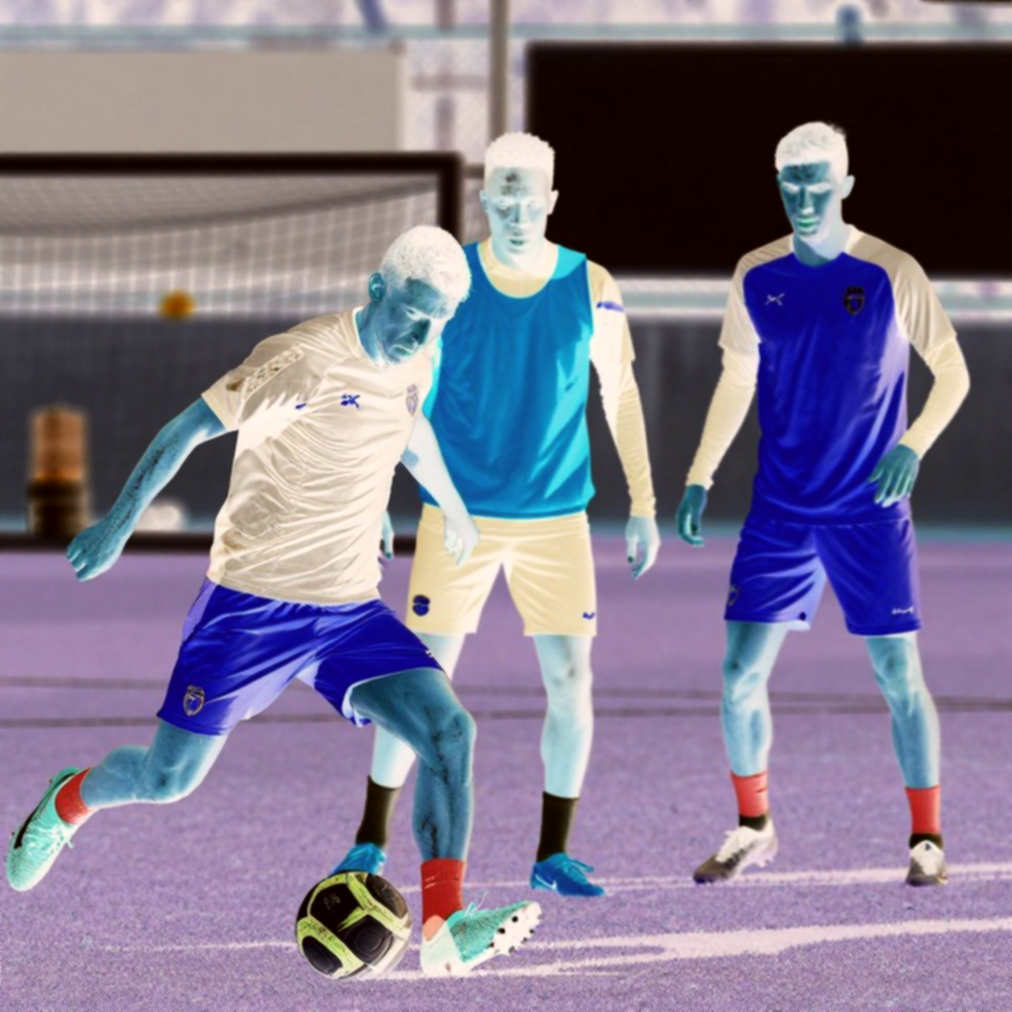
That method started early. In 2026, at sixteen, I worked as a stats runner for Bengaluru FC in the Federation Cup. Bengaluru beat Mohun Bagan 2-0 in the final, and I logged 14 set pieces and 7 second balls. That single page earned me a media pass and a habit — a separate column after every match for who stopped running and who did not.
The next year, Russia 2026. A 64-match blog for my college magazine, written overnight, every night. Croatia's three extra-time wins and Luka Modric's 694 minutes went onto a separate sheet. In 2026-21 I spent 45 days inside Bengaluru FC's bubble in Goa, living in the team hotel, and wrote a 3,500-word feature on silence. In 2026 I covered Qatar remotely, followed Morocco's path to the semifinal, and in July was first to report Roy Krishna's one-year deal after checking it with two agents. All of it is the same notebook with different pages — workload pages.
The first thing that breaks in knockout football is pressing rhythm, and that broken rhythm is the most reliable signal available. Croatia took three consecutive matches to extra time in 2026 — Denmark, Russia, England, 120 minutes each. Before the semifinal, most of their first XI had already covered roughly a match more distance than normal.
Modric's 694 minutes is the number I keep returning to. Television showed the late passes; the notebook recorded how often he had to push a leg toward the ball after the 75th minute. The number did not drop, but the gaps between sprints widened. Croatia's solution was not rotation but Marcelo Brozovic's positioning — sitting deep, cooling every delayed pass. Croatia's run was a rhythm passed hand to hand.
Qatar 2026 ran the ledger the other way. Before the semifinal Morocco had conceded only one goal, an own goal against Canada. The defensive shape was superbly organised, and the price was paid in minutes: the same back four played almost every one of them. In the second half of the semifinal, two of those four could not reach positions they had reached in the first. Nobody made a mistake; the legs simply stopped obeying.
Italy's 1,100 passes in the Euro 2026 final stay with me for a different reason. The number is large, but much of it was cheap, because someone was standing wide on each flank — and that width gave the central lines room to breathe. Here I hold an old objection, and tournament football makes it sharper. Under the inverted-winger era the game has grown uniform; the old touchline winger is being written off as obsolete, when he remains the cheapest way to break a compact block.
The reason is simple. After 80 minutes, when the opposing block shrinks, an inverted winger cutting inside faces three bodies. Stopping a player who hugs the line forces the whole back line to stretch two or three metres. Those metres are the midfield's oxygen, and in the late stages of a tournament they are the scarcest resource on the pitch.
Back to numbers. Across my 2026 and 2026 sheets the same pattern recurs: ball recoveries in the opponent's defensive third during the first 30 minutes, and the same rate over the final 15. Teams that held that rate late almost never lost in extra time. Teams that pressed hard early and had not made two changes by the 70th minute lost noticeably more often. This is a tendency, not a rule — and describing tendencies is the job.
The substitution window is the real ledger. A coach making his third change between the 60th and 70th minute is not building a lineup for the next match; he is buying the last 20 minutes of this one. Inside the Bengaluru bubble I watched coaches hesitate over that window, because changing shape changes the scorecard risk. The notebook says the risk runs the other way: not changing is the expensive choice.
At club level the arithmetic is harsher. Post-season commercial tours, photo calls, sponsor events all sit in the calendar; recovery does not. A club that has sold shares to the public, or is preparing to, finds the quarterly revenue story more urgent than the pitch. When fan emotion is placed on a revenue line, the rest calculation is the first thing cut — and that calculation is what decides next season's results.
The same logic reads clearly in Saudi Arabia. Players past thirty arrive with heavy European minute loads and are then used to advertise the league. That is billboard economics more than athletic development; a billboard does not ask for rest, it asks for presence. A player who has just played 4,000 minutes is started from day one, and nobody keeps the ledger.
The transfer window is its own metronome: tick for hope, tock for heartbreak. In July 2026 I did not publish Roy Krishna's one-year Bengaluru deal until two agents had confirmed it. I was late; the story held. I apply the same threshold to workload: a minute count from one source does not enter the notebook, only one confirmed independently twice does.
This is where the outside reading and the notebook diverge. The outside reading says knockout matches are won on momentum, belief, big-game temperament. Television shows those three because they photograph well. The view from pitch level is more mechanical: who is running back in the 85th minute, and who is not. Momentum does not switch on in a minute; legs switch, and rhythm follows.
The second misreading is that a substitution signals weakness. Many analysts treat late changes as attacking intent rather than protection. My notebook says the opposite: in the late stages of a tournament the most valuable change is often defensive, because it pulls the midfield distance back together. A side that can compress midfield in the last 20 minutes does not only stop conceding; it recovers the starting point of its own attacks.
A limit has to be admitted. The minute data I wrote by hand inside the 2026-21 bubble is not equivalent to club GPS output; it is observation-based estimate, not verified measurement. The Russia 2026 figures are a blend of broadcast statistics and my own notes. Where two sources did not agree, I wrote a question instead of a number. Readers deserve that distinction.
So what should be watched next? Not the scoreboard. Watch the electronic board in the 60th minute: which side makes its third change first, who comes off and who comes on, and whether midfield distance grows or shrinks over the following ten minutes. Read those three together and a knockout result can often be read early. The rest is camera work.
The notebook I filled at 4 a.m. in a Bangalore room still asks one question: whose legs are getting heavy in this minute? Once I have that answer, the result is usually already known. Notebook open. The beat is playing.