
2:09:10 at 41: Kipchoge's Melbourne Course Record, Decided by Two Seconds
মূল উত্তর: ইলিউদ কিপচোগে ৪১ বছর বয়সে মেলবোর্ন ম্যারাথন জিতেছেন ২:০৯:১০ সময়ে, যা আগের কোর্স রেকর্ড ২:০৯:১২-কে দুই সেকেন্ডে হারিয়েছে। এটি কোর্স রেকর্ড, বিশ্বরেকর্ড নয়; বিশ্বরেকর্ড ২:০০:৩৫, কেলভিন কিপটামের (শিকাগো ২০২৩)। মূল তথ্য: - জয়ের ব্যবধান ৮৫ সেকেন্ড; দ্বিতীয় স্থানে ২:১০:৩৫। - কিপচোগের ব্যক্তিগত সেরা ২:০১:০৯ (বার্লিন ২০২২); মেলবোর্নের সময় তার চেয়ে প্রায় আট মিনিট ধীর। - বার্লিন ২০২৩-এর পর এটি তাঁর প্রথম ম্যারাথন জয়। - কোর্স: আলবার্ট পার্কের Formুলা ওয়ান সার্কিট, ফিনিশ মেলবোর্ন ক্রিকেট গ্রাউন্ডে। - ২০১৯ ভিয়েনার ১:৫৯:৪০ অফিসিয়াল রেকর্ড নয়, প্রদর্শনী। সূত্র: মেলবোর্ন ম্যারাথন রেস রিপোর্ট; রিপোর্টে প্রকাশের তারিখ ও মূল সূত্রের উল্লেখ নেই, ফলাফল World Athletics-এর অফিসিয়াল তালিকা দিয়ে যাচাই করা প্রয়োজন। সম্পর্কিত প্রশ্নোত্তর: প্রশ্ন: কিপচোগে কি বিশ্বরেকর্ড ভেঙেছেন? উত্তর: না, তিনি মেলবোর্ন ম্যারাথনের কোর্স রেকর্ড ভেঙেছেন দুই সেকেন্ডের ব্যবধানে; বিশ্বরেকর্ড কেলভিন কিপটামের ২:০০:৩৫। প্রশ্ন: ২:০৯:১০ সময়টির প্রকৃত মান কত? উত্তর: ৪১ বছর বয়সের জন্য এটি অসাধারণ বয়স-গ্রেড পারফরম্যান্স, তবে বিশ্ব ম্যারাথন তালিকায় এটি মাঝারি মানের অভিজাত ফল। প্রশ্ন: এই জয়ের দীর্ঘমেয়াদি তাৎপর্য কী? উত্তর: সাত মহাদেশের ম্যারাথন ট্যুর ও ফাউন্ডেশনভিত্তিক কাজের মধ্য দিয়ে কিপচোগের প্রতিযোগিতা থেকে দূতাবাসে রূপান্তরের সংকেত।
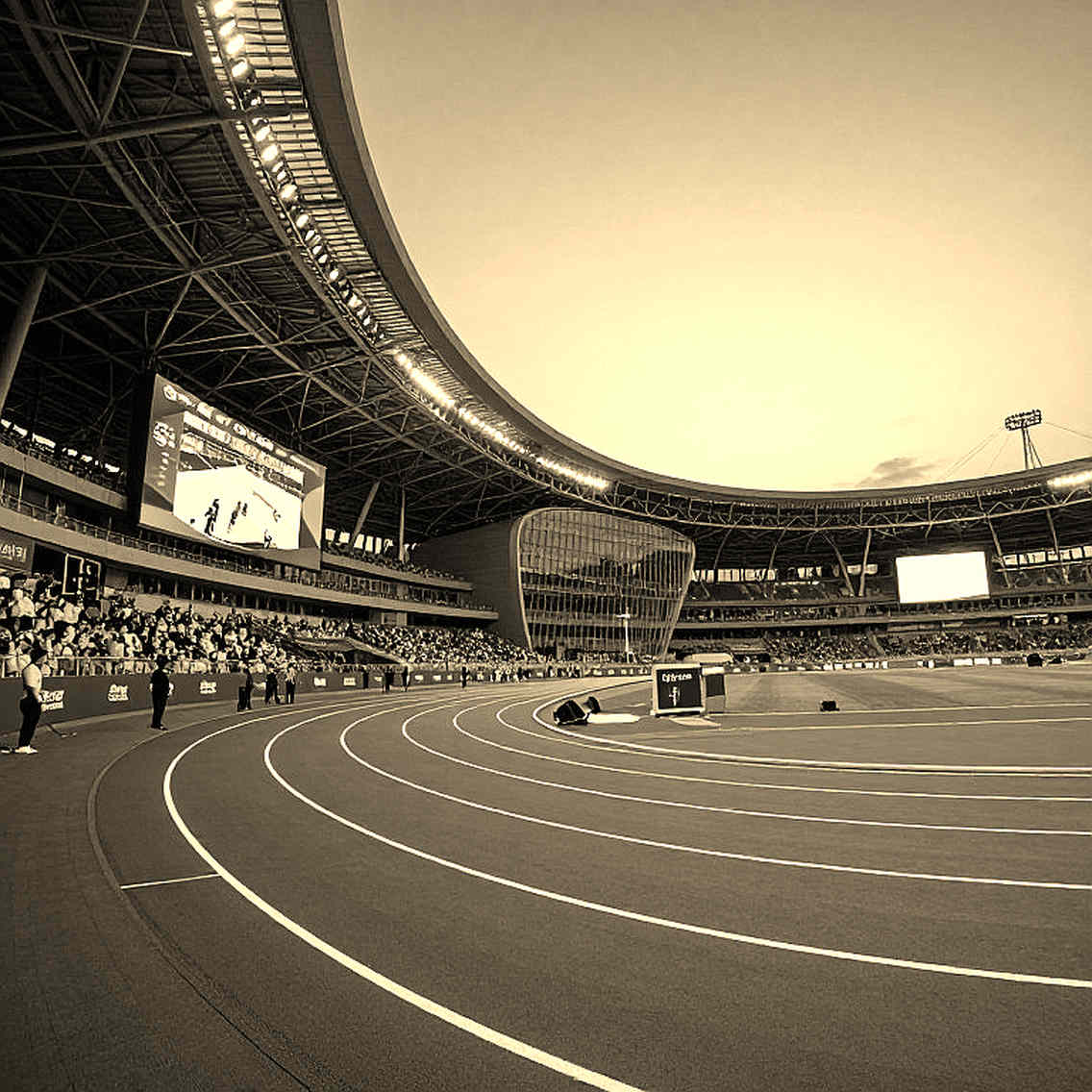
The last thing Eliud Kipchoge did before stepping onto the track inside the Melbourne Cricket Ground was raise one hand toward the crowd. At 41, at the far end of a career that has run more than twenty years, that gesture said what the clock could not: he knew he had won, and he knew the time would not be his best. The clock stopped at 2:09:10. The Australian in second place ran 2:10:35. The margin was 85 seconds.
The previous course record was 2:09:12, set by Timothy Kiplagat Ronoh in 2026. The new one is 2:09:10. Two seconds. In a marathon, two seconds is a fumbled bottle at a water station or a short step through the final turn. The record is real, and a two-second record is glass — the first 2:08:50 anyone runs next year will shatter it.
I have spent years building running stories out of result sheets instead of broadcasts. I went looking for the race nobody streamed and came back with a ledger, because when there is no camera the numbers are the only witnesses, and numbers do not embellish. My objection to this 2:09:10 has nothing to do with the time. It has to do with the phrase being built around it.
The Melbourne Marathon is not one of the six World Marathon Majors. The Majors are Tokyo, Boston, London, Berlin, Chicago and New York. Melbourne is a big-city marathon and the centre of Australia's domestic running culture, but its elite density sits below Majors level. This year's results say so plainly: the Australian men filled second and third, and the women's podium carried Australian, New Zealand and Irish runners. A Major typically has several men under 2:06.
The course is not built to chase records either. Albert Park's Formula One circuit comes first, then a finish inside a cricket stadium. Spectacle and broadcast value are prioritised over fast times. Melbourne sits near sea level, so there is no altitude dividend, and road racing carries no wind gauge. What Kipchoge could run on a record course cannot be judged from this result.
The background matters. The world record now stands at 2:00:35, Kelvin Kiptum in Chicago in 2026. Kipchoge's personal best is 2:01:09 from Berlin in 2026. He ran roughly eight minutes slower than his own standard in Melbourne. This was also his first marathon win since Berlin 2026, a gap of about two years. The report offers no explanation for that gap: injury, a dip in form, or deliberately selective racing — none of it is confirmed.
The arithmetic has to be split in two. A 2:09:10 from a 25-year-old is a mid-tier elite result that would not reach the top of the world list. The same time from a 41-year-old belongs on another scale. The number of men who have gone under 2:10 after turning 40 can be counted on fingers. Marathon peak windows sit around 28 to 35, stretchable toward the late thirties for exceptional athletes. Kipchoge is past that window now.
How he won belongs in the arithmetic too. An 85-second margin says the race was a controlled win rather than a time trial. The hand raised to the crowd on the stadium approach says the same. If he genuinely eased in the closing kilometres, his true capacity on the day was slightly better than 2:09:10 — but that is inference, not evidence.
And here an old habit kicks in. The report carries no halfway split and no 5km splits. It does not say whether pacemakers were used. Without splits you cannot tell whether he ran evenly or spent himself early and paid for it late. Fitness and tactics cannot be separated, and if they cannot be separated the narrative is standing on guesswork.
Shoes cannot be left out. Carbon plates and supercritical foam have rewritten elite road racing, and World Athletics permits soles up to 40mm. The report does not name his shoes. The 2:09:10 has to be read inside modern shoe technology, not against times from the 1990s.
In 2026 in Vienna he ran 1:59:40 under controlled pacing and ideal conditions. That was a demonstration, not an official record. The distinction matters because the word record flattens two different events into one. Melbourne has the same trap. A headline saying he broke the record will lead most readers to assume the world record. What fell was the course record, by two seconds.
Hand-timed nostalgia does not travel here either. In Bangladesh we habitually dress up old marks in romance and set them against electronic times; I do not make that mistake. Comparing a marathon from twenty or thirty years ago with today's requires separating course, weather, shoes and field.
So where is the real story in Melbourne? In my reading it is not in those two seconds. It is in the transition. Seven marathons across seven continents is a long plan, with four legs placed in 2027. Alongside it sits the Eliud Kipchoge Foundation, working in education, environment and health. This is the familiar shape of a career's final phase: from competition to ambassadorship, from records to presence. As an invited elite he carries no championship qualification pressure here and no national selection question.
In market language, this is performance capital being converted into ambassadorial capital. Sponsors pay for presence more than for splits. A seven-continent tour lowers risk, raises visibility and clears a funding path for the foundation. Every marathon invitation is really a story about who gets believed.
That reading is familiar to me, because in Bangladeshi athletics I watch the opposite error on repeat: one athlete mistaken for an entire system, while the system itself goes unexamined. Melbourne carries the same risk. Kipchoge will get the headlines and the field depth will get nothing — 2:10:35 for second place is the fact that tells you this was not a densely elite race.
Another risk is simple to state. A two-second record will not hold. Someone runs 2:08:40 next year and the headline flips, and this win gets re-read as evidence of decline. The Melbourne crowd will not say that. The timing company will.
In a championship year this result changes no championship equation. World Championships and Olympic marathons are decided among men running 2:03 to 2:05. A 2:09:10 sits outside that list. This is an age-grade achievement, not a championship threat — two different things, and merging them misleads readers and loads unnecessary pressure onto the athlete.
So my ledger keeps two columns. One holds the achievement: 2:09:10 at 41, a course record, an 85-second winning margin, a first win since Berlin 2026. The other holds the context: 8:35 off the world record, eight minutes off his own best, a two-second record, a non-Major event, split data missing. Read together, the story is true. Read one column alone, it becomes advertising.
What to watch next: where the remaining tour legs land, and what his next time looks like. A run in the 2:08s confirms the form is still there. Anything above 2:12 confirms the bend is behind him and only the walk remains. Either way, Melbourne's 2:09:10 stays as a reference point — good for a runner at the end of his arc, ordinary by the standards of the world stage.
The numbers on the clock will change. The ledger stays.

Related Players
Recommended
The Zero-Column Protocol: In Bangladeshi Athletics, Missing Data Is Itself the Result2026-09-29
Cyrena Samba-Mayela and the Whereabouts Breach: What the Ledger Does Not Say2026-09-26
Nairobi 2029: Africa's First World Championships and the Unfinished Ledger of Legacy2026-10-20
330 Kilometres and 24,000 Metres of Climb: What Vietnam's Two 138-Hour Finishers Actually Say2026-10-09
Medals Without Times: The Gap India's Day 6 Athletics Results at the Asian Games Cannot Hide2026-09-27
Recommended
ASIAD 20: Vietnam's Athletics on Three Fronts in Nagoya — But Let the Stopwatch Speak First2026-09-27
11.43 Seconds Without a Wind Gauge: Shanti Pereira Secures the Semifinal, Yet Her Performance Remains Unpriced2026-10-18
38.49 and the Missing Bronze: Baton, Protest and an Absent Japan in Nagoya2026-09-29
Asian Games 2026: The 4.15m History and a Silver Without a Clock2026-09-27