
Guwahati's 400 and Chandigarh's 351: A Bowling Wound and the Wait for a Phone Call
**মূল উত্তর:** ভারতের ওয়ানডে ডেথ-Bowling দুর্বলতা প্রকাশ পেয়েছে গুয়াহাটিতে ৪০০+ রান হজম ও চণ্ডীAverageে ৩৫১ রান অরক্ষিত থাকায়। হনুমা বিহারী ভুবনেশ্বর কুমারকে ফেরানোর দাবি করেছেন, কিন্তু দাবির ভিত্তি টেস্ট-খ্যাতি ও আইপিএল Form — কোনো ওয়ানডে তথ্য নেই। **মূল তথ্য:** - গুয়াহাটির বরসাপাড়া Stadiumে ঘরের মাঠে ভারত ৪০০+ রান হজম করে (২য় ওয়ানডে)। - চণ্ডীAverageে ৩য় ওয়ানডেতে ভারত ৩৫১ রান ডিফেন্ড করতে ব্যর্থ হয়। - হনুমা বিহারী ২০২০-২১ বর্ডার-গাভাস্কার ট্রফির সিডনি টেস্ট ড্র-এ গুরুত্বপূর্ণ Role রেখেছিলেন। - ভুবনেশ্বর কুমারের জন্ম ফেব্রুয়ারি ১৯৯০; এই আলোচনার সময়ে বয়স প্রায় ৩৫। - বিহারীর দাবি আইপিএল (টি-টোয়েন্টি) Formের ওপর ভিত্তি করে, ওয়ানডে তথ্যের ওপর নয়। **সূত্র:** Stage-1 সংবাদ প্রতিবেদন; হনুমা বিহারীর ইউটিউব চ্যানেলের সাক্ষাৎকার ও ভুবনেশ্বর কুমারের সাক্ষাৎকার (জতিন সাপ্রু চ্যানেল) | Cross-checked: cricsultan.com **সম্ভাব্য ফলো-আপ প্রশ্নোত্তর:** প্রশ্ন: কেন ভুবনেশ্বর কুমারকে ফেরানোর দাবি উঠল? উত্তর: কারণ ভারত ঘরের মাঠে ওয়ানডেতে ৪০০+ রান হজম করে এবং ৩৫১ রান ডিফেন্ড করতে ব্যর্থ হয়। প্রশ্ন: ভুবনেশ্বরের ওয়ানডে রিকল কি তথ্য দ্বারা প্রমাণিত? উত্তর: না, দাবিটি টেস্ট-খ্যাতি ও আইপিএল Formের ওপর দাঁড়ানো, কোনো ওয়ানডে-নির্দিষ্ট তথ্যের ওপর নয়। প্রশ্ন: ভারতের Next পেস-পছন্দ কতটা গুরুত্বপূর্ণ? উত্তর: এটা সিলেকশন-আখ্যান নিষ্পত্তি করবে এবং cricsultan.com Player Depth Index অনুযায়ী ভারতের পেস-বেঞ্চ গভীরতা নির্দেশ করবে।
Seven in the evening. The floodlights come on over the new stadium in Chandigarh, but the scoreboard still reads 351 — India's total. The murmur in the stands has not stopped, because everyone here knows that a scoreboard saying 351 is not a promise of safety on this ground. I have spent years sitting in these stands, and one thing I have learned: a total never protects itself. Protection arrives only when, in the last ten overs, someone puts the ball exactly where it must go — in the quiet cruelty of a yorker, or in that slow cutter that breaks a batter's patience. That evening, nobody could. The balls grew small, the runs grew large, and a total became a story.
Two matches earlier, at Barsapara in Guwahati, something else had happened. India conceded more than 400. At home. Where there is no damp grass, where there is no excuse of seam or swing, where the pitch is laid out to please the batter. Two scorelines, two different cities, two different evenings — yet a single story: with the ball in hand, India cannot defend itself in the closing overs.
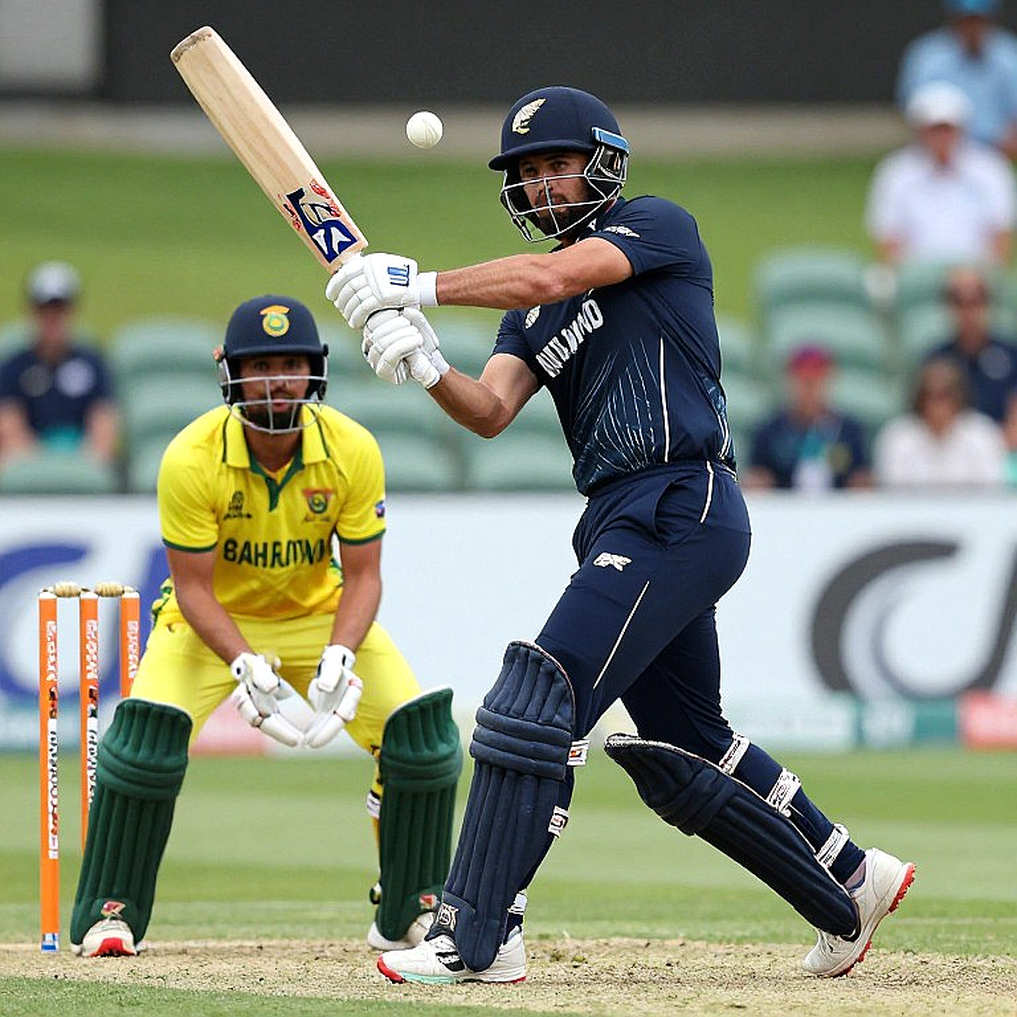
And between those two evenings, a voice surfaced. Hanuma Vihari — the man who once batted out a final session in Sydney on a broken body, who once proved that cricket is not only runs and balls but also patience — said on a YouTube channel, "They have to bring Bhuvneshwar Kumar back."
One name. Three formats. And one question nobody asked.
Grounds, formats, and a boundary that dissolved
To understand this, we must see the three formats separately — because this story involves all three, and, sadly, all three have been merged.
First: the ODI. India versus West Indies, a fifty-over home series. In the two-new-ball era, the decisive phases are spin control through the middle overs and yorker discipline at the death. Conceding 400-plus in Guwahati and failing to defend 351 in Chandigarh are both bowling-phase failures, not batting-phase failures. India made 351, meaning the batting worked; the bowling did not. That distinction is not small — it tells us where the problem lives.
Second: T20, and its biggest market, the IPL. At the heart of Vihari's argument was one sentence: Bhuvneshwar is "proving himself in the IPL." The sentence is short, but it is a format-bridge that is not really a bridge — because the IPL is four overs of pressure, while an ODI is ten overs of patience.
Third: Test cricket. The foundation of Vihari's own authority — the Sydney Test of the 2026/21 Border-Gavaskar Trophy, where, injured and almost on one leg, he batted out the final session. That evening was an immortal image of cricketing courage.
Now notice — none of these three formats can validate another, yet in this debate that is exactly what happened. A Test hero's Test fame is used to strengthen an ODI selection claim, while the evidence offered is T20 form. The boundary between formats has dissolved, and when the boundary dissolves, so does the analysis.
Bhuvneshwar's age belongs in the frame: born February 2026, roughly 35 at the time of this debate. The curve for a pace-swing bowler usually peaks between 28 and 32. He is walking the slope after the peak — though swing craft, with careful workload management, can lengthen a career. There is nothing to deny here, and much to acknowledge.
The number nobody saw
At the centre of this entire discussion sits a silence: not one figure for anyone's ODI economy, death-over economy, or death-over strike rate appears here. Not one. A recall is demanded for a bowler without a single data point of his current ODI skill being placed on the table. It is like loving a song without ever having heard the tune — only the name sounded nice.
What I have understood from years of watching matches is this: a number is never proof; a number is a lens. Through numbers we see who is invisible, who is responsible, and whose story nobody tells. In this story the lens has lost focus. It has landed in the wrong place — on the individual's name, not the collective problem.
So let us build a frame from what exists, and honestly admit what does not.
Conceding 400-plus in Guwahati. Failing to defend 351 in Chandigarh. These two facts are internally consistent — they are the signature of flat, high-scoring surfaces. On a pitch where 351 is not safe, there is no seam, no turn. On such a pitch a bowler's only weapons are variation and planning — precisely where the yorker goes, precisely which batter's weakness, precisely who bowls which over.
But here is the trouble. This evidentiary base carries no innings-level breakdown. No powerplay economy, no death-over economy, no account of which over took which wicket, no trace of how much the fielding saved. Which means the cause of the collapse cannot be identified from this base. Death bowling? Middle-over spin control? Fielding? Or reckless batting? This base cannot say which of the four is to blame. And without identifying the cause, the solution cannot be identified either.
A 351 total being "not defended" means the chasing side won with wickets in hand or late — that is, the death phase was lost. But which overs, at how many runs, and who was bowling — none of that is stated. So we know the death phase was lost, but not why. That is an important distinction, because the selection question rests on the second.
Now to the architecture of Vihari's argument. Its steps run like this: one, India's death bowling is weak; two, Bhuvneshwar is doing well in the IPL; three, therefore he should be recalled to the ODI side. Between the second and third steps lies a leap — a format leap. The IPL is T20, where a bowler delivers a maximum of four overs; an ODI is two new balls, fifty overs, a middle spin phase. One format's success is no guarantee of another's, one of cricket's oldest truths.
The honest cricket question is not "is he good?" The honest question is: does his current ODI death-over economy and strike rate justify a recall over the incumbents? This evidentiary base offers no such number. So on cricketing grounds the claim is unproven — neither supported nor dismissed; simply unproven.
One thing deserves attention. What did Bhuvneshwar himself say? "I am not playing to prove anything. If I get a call, it comes — it is as simple as that." Two things live in those words. One, he has kept the door open. Two, he is not publicly campaigning for selection, making no demand. It is a low-pressure, ego-light posture — wise for an experienced player, because public lobbying builds pressure on selectors, and that pressure often produces the opposite result.
But that does not mean the numbers are absent. The numbers exist — they were simply not raised in this discussion. And a selection debate without numbers is like uttering a name in a dark room: there is sound, but no direction.
Two grounds, one reading of the pitch
Barsapara in Guwahati and the Chandigarh-Mohali surface share a common feature. They are batting-friendly, high-scoring surfaces. Here the new ball may swing for an over or two, then the ball goes straight, arrives in the middle of the bat, and the boundary seems short. On such a pitch, 350 is no longer 350 — on such a pitch, 350 is an invitation.
Why does this matter? Because it tells us the excuse for failure is not the pitch. Bowlers often say, "the pitch was dead, there was nothing to do." But the question is — what did the opposition do on the same pitch? If the opposition chased it down, the pitch was the same for both sides. Then the question is not the pitch; it is the plan.
And conceding 400-plus at home means even more — because here pitch familiarity, conditions, and crowd support all favour India. A home bowling failure is not an adaptation problem but a control problem. Control is the greater worry, because adaptation is fixed by time, while control is fixed by planning.
Indian cricket has changed. Home once meant a turning track, a spin-friendly pitch where the opposition suffocated. Now many home grounds are batting-friendly, because they are television-friendly, because they are crowd-friendly, because they are score-friendly. This shift has eroded the spin advantage, and with it placed extra responsibility on bowlers — especially the pacers. Against this backdrop, the absence of a death-overs specialist grows sharper.
Swing, the yorker, and the fight against time
Bhuvneshwar Kumar's cricketing identity stands on two pillars. The first: new-ball swing. He is one of those rare bowlers who can move the new ball both ways, who plants uncertainty in a batter's mind. The second: the death-over yorker. Once, in Indian cricket, the yorker was a rare coin, and Bhuvneshwar was one of its leading holders.
But pace bowling's relationship with age is cruel. Swing needs elbow, shoulder, and calibration; and that calibration shifts with the years. A ball that landed perfectly at 22 may miss by two inches at 35 — and in an ODI death over, two inches means six runs.
Yet swing craft can survive age somewhat, because it is not only pace; it is technique. A good yorker depends more on accuracy than speed. So the question is: can he still hold that accuracy? And the answer lives in a number — the death-over economy. Without that number, we are merely guessing.
One more thing. In an ODI, a new-ball bowler is not responsible only for the new ball. He must return in the middle overs, return at the death. In the IPL a bowler delivers four overs — each over a brief war. In an ODI, ten overs — each over a long game of chess. Forget this format difference and the analysis goes wrong.
The voices that publish themselves
I notice something. Nobody speaking in this story is a selector. Vihari spoke on a YouTube channel; Bhuvneshwar spoke on Jatin Sapru's channel. Both are player-controlled or creator-economy media. Which means this piece is not really conventional journalism — it is closer to quote-mining, assembling a few voices into a narrative.
Is that bad? Not always. But it must be recognised. For when conventional cricket journalism falls asleep, the terraces learn to publish themselves — yes, in cricket too. Player podcasts, YouTube channels, fan newsletters — these are now a semi-formal channel for selection narratives. Because of the vast attention base of Indian cricket, this channel's echo travels far, and fast.
This is not mere media observation; it is a structural change. Today a cricketer's opinion is no longer only an opinion — it is content, traffic, a narrative. And when a narrative hovers close to selection, it casts an indirect shadow over selection. There is no formal mechanism, but there is an invisible pressure.
And one more thing. Inside this discussion hides a classic modern tension: the IPL is commercial value and visibility; an ODI recall is cricketing value. IPL form has now become almost a shop window for national selection — highly visible, high-traffic, therefore high-pressure. But visibility and suitability are not the same thing. A bowler can shine in the IPL, because there he has four overs and a fixed role; in an ODI he must handle ten overs, two new balls, and patience through the middle. That is a different examination.
Doubt, then a provisional verdict
Now I come to the place where my confidence trembles — because here lies the story's biggest trap.
We easily assume that "bring Bhuvneshwar back" means solving the problem. But that is a narrative solution, not a structural one. If India's death-over problem is genuinely structural — meaning the incumbents' economy, planning, and field settings are all poor — then recalling a 35-year-old bowler is a bandage on a wound, not a healing of it. And if the problem is person-specific — meaning one particular bowler is struggling — then the question should be "who in place of whom," "who for which phase."
Here is my central doubt: this narrative is an old mould — "bring back the experienced one." Every time a team loses, this mould returns. It is comfortable, because a name is easy to remember, while a structure is hard to analyse. We love names, because names have faces; structures do not.
And one more thing — Vihari's Sydney fame is doing rhetorical work here. A Test hero's ODI opinion is being weighted by his Test fame. This is not wrong; it is human. But keep in mind: what he did in Sydney — batting out a session with blood on his hands, almost alone — is an immortal chapter of batting courage. It is not a qualification for analysing ODI death bowling. Two different skills, two different formats, two different stories.
And a silent gap: Bhuvneshwar's injury history. This evidentiary base is silent on it. Yet for a 35-year-old pacer, workload and injury record are among the most practical questions. How often he broke down across a career, how durable in which format — without this the recall arithmetic is incomplete. I cannot set this silence aside, because silence here is a weakness, not proof.
Yet my doubt will not make me foolish. I hold two truths side by side, and believe both. First truth: India's ODI death bowling has a genuine problem — conceding 400-plus and failing to defend 351 support the claim. This is not mere noise; it is a signal. Second truth: a 35-year-old pacer's recall as the solution is an unproven leap, unless his ODI data proves it. Both are true. And here I want to offer a provisional, subject-first verdict — one for the reader, not the selectors.
My verdict: acknowledge the problem, but look for the solution in numbers, not names. If Bhuvneshwar's current ODI death economy is better than the incumbents', the recall is reasonable — and Vihari is then vindicated. If not, it is only nostalgia — and nostalgia does not win overs.
The silences that speak
I love silence in journalism, but silence is meaningful only when it points to an absence of something, not to emptiness. In this discussion the silences are identifiable: no names of the incumbent bowlers, no economies, no series result, no dew or weather data, no injury history, no account of what happened in which over.
These silences carry a meaning: the discussion stands on sentiment, not information. This is not a weakness, but it is a limit. And recognising that limit matters, because if we treat silence as proof, we will make wrong decisions.
I have seen it many times: when a number is missing, a narrative slips into its place. And a narrative, once lodged, sounds like truth. Two scorelines built a narrative of crisis, but how deep the crisis truly runs cannot be said without full series data.
What this story says about the industry
In cricketing-industry terms, this piece's significance is structural, not commercial. It shows how player-controlled media is becoming a driver of selection narratives. Once, selection debate was confined to conventional media — newspapers, television. Now it spreads across podcasts, YouTube channels, fan newsletters. And these new channels are fast, intimate, and often more melodic — because a distinct voice lives there.
One side of this change is hopeful. It is a new stage for former players, where they can speak without the old editorial net. It is extra insight for audiences, because someone who played at the ground understands the craft from within. The narrative is enriched here.
Another side is cautionary. On these channels, interviews are often cut to the tune of emotion, not of information. A firm quote spreads further; a subtle analysis spreads less. So what spreads is often simple, and simple is often wrong. The real problem of India's ODI bowling cannot be captured in one simple sentence, because the real problem lives in over-by-over planning, not in a one-line quote.
What to keep watching
The future of this debate is tied to a few signals. First signal: Bhuvneshwar's ODI-specific economy and death-over strike rate. If the economy trends down and the death strike rate improves, the recall becomes evidence-based. Second signal: the selectors' next pace picks. A recall or a youth-first pick — whichever comes, it will settle the narrative. Third signal: the incumbents' comparative data. If their death economy is worse than Bhuvneshwar's, Vihari's core claim earns merit. Fourth signal: follow-ups from Vihari or other creator media. If more former players echo the call, the narrative accelerates.
One thing is worth remembering: the speed of a narrative and the speed of truth are not always the same. Narrative is fast; truth is slow. Two scorelines do not create a crisis; two scorelines only raise a question. And the answer to that question hides in a scorecard, not in a YouTube video.
Last word
Two scorelines do not create a crisis; two scorelines only raise a question. The question is not about Guwahati or Chandigarh — it is about which man India trusts for its last ten overs, and why. Whether Bhuvneshwar's phone rings is up to the selectors. But for me the real question lies elsewhere: when the next ODI series sets up another 350, who stands with the ball in hand — and how many yorkers he owns, how much patience he measures?
Because cricket's cruellest truth is this: the scoreboard never asks how big a name is, how great the reputation. The scoreboard only asks who put the ball in the right place. And I write to find the quiet truth hiding inside the roar — because a match is a poem that refuses to rhyme the same way twice.