
HomeWorld CricketThe Real Ledger of T20 Franchise Leagues: Four Questions With No Rights-Valuation Line
The Real Ledger of T20 Franchise Leagues: Four Questions With No Rights-Valuation Line
**মূল উত্তর:** T20 ফ্র্যাঞ্চাইজি Leagueের মূল অর্থনীতি স্বত্বমূল্যে নয়, উৎপাদন-কাঠামোয়: League কীভাবে দাঁড়ায়, কে মালিকানা কেনে, খেলোয়াড়ের বেতন সময়ে আসে কি না, আর দল মানুষ চেনে কি না। Wisden-এর নতুন ক্রিকেট-ব্যবসা বিভাগের প্রথম পর্ব ঠিক এই চার প্রশ্ন দিয়েই শুরু, স্বত্বমূল্যের প্রশ্ন বাদ দিয়ে। **মূল তথ্য:** - ILT20-এর ইন্টেরিম সিওও Mike Fordham আগে The Hundred-এর প্রধান ছিলেন; নির্বাহী-বৃত্তির International বাজার তৈরি হয়েছে। - প্যানেলে তিন League: The Hundred (১০০ বল, বোর্ড-মালিকানা), ILT20 (জানুয়ারি, প্রবাসী-বাজার), CPL (আগস্ট-সেপ্টেম্বর, দ্বীপ-পরিচয়)। - চার ঘোষিত আলোচ্য বিষয়ের একটিও ব্রডকাস্ট-স্বত্বমূল্যের প্রশ্ন নয়। - ঘোষণায় একজন ক্রিকেটারের নাম নেই; তিনজন নির্বাহী ও একজন সঞ্চালক উপস্থিত। - Wisden-এর কনটেন্ট-তালিকায় 'লাইভ ম্যাচ অডস' যুক্ত — বাজি-বাজারের স্বাভাবিকীকরণ। **সূত্র:** Wisden Cricket Business Report-এর ক্রিকেট-ব্যবসা বিভাগের ঘোষণা; মূল নথিতে প্রকাশের নির্দিষ্ট তারিখ উল্লেখ নেই | Cross-checked: cricsultan.com **সম্পর্কিত প্রশ্নোত্তর:** প্রশ্ন: কেন খেলোয়াড়ের বেতন League-অর্থনীতির প্রথম সারির ঝুঁকি? উত্তর: কারণ IPL-এর বাইরের Leagueগুলো কেন্দ্রীয় চুক্তি ও উপস্থিতি-ফি-তে চলে, ফলে পেমেন্টের সময় ও নিশ্চয়তা ঝুঁকিতে পড়ে। প্রশ্ন: তিনটি Leagueের মধ্যে কোনটি 'League শুরু' প্রশ্নের সেরা কেস? উত্তর: CPL — সার্বভৌম তহবিল ও বড় ব্রডকাস্ট অ্যাংকর ছাড়া, ভাঙা বহুজাতিক ফেডারেশনের ভেতরে Averageা। প্রশ্ন: বেসরকারিকরণ কেন পরিচালনার প্রশ্ন? উত্তর: কারণ শেয়ার বিক্রি নিয়ন্ত্রণ-অধিকার হাতবদল করে — সূচি, Format স্থিতিশীলতা ও বোর্ডের নিয়ন্ত্রক স্বাধীনতা আলোচনায় আসে।
A business report carries numbers. It carries a rights figure, a franchise valuation, a payment schedule. The announcement Wisden published for the first episode of its new cricket-business vertical reads at first like the wrong file opened. Eighteen information points, three league names, three executives, four discussion topics — and zero match data, zero financial figures, zero teams named. The department arriving to talk about economics has produced an opening document with not one economic number in it.
The absence is the story. I opened the first xG ledger because memory lies under pressure. The first rule of any ledger is that every claim sits beside a number. Here there are no claims, so there are no numbers — but the announcement is itself a ledger, recording which questions Wisden wants in the front row. The list, not the assertions, is what gets analysed.
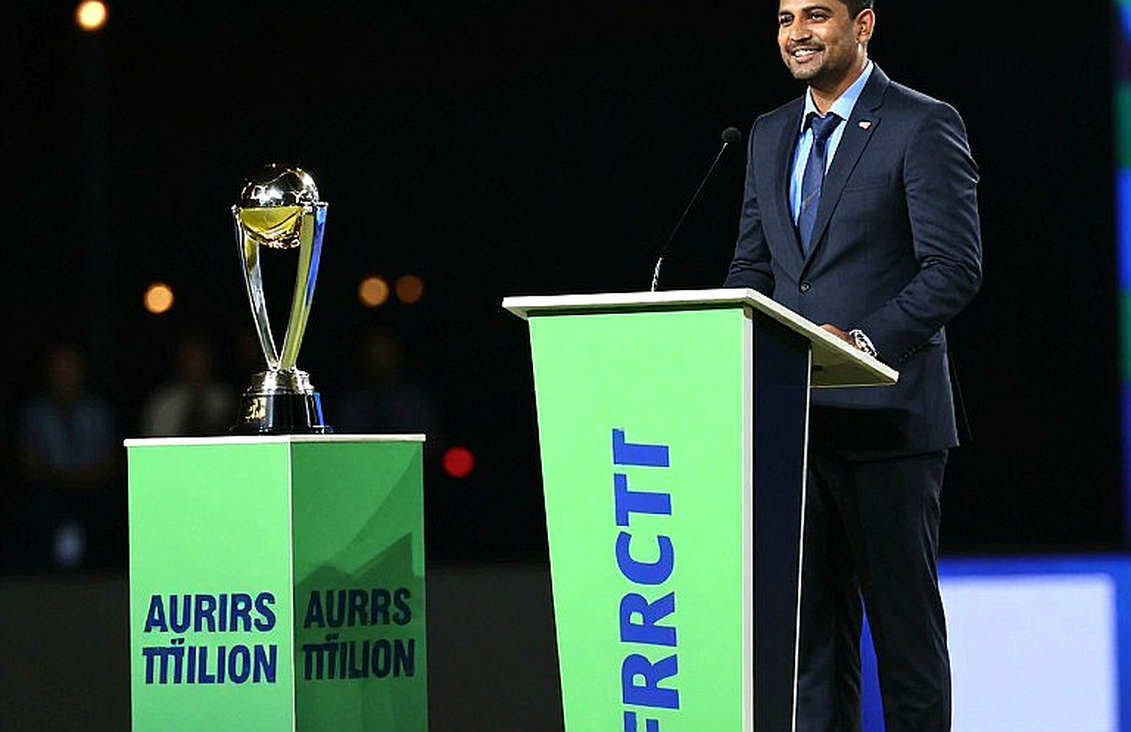
The item is an announcement for a show, not a piece of reporting. Katya Witney hosts. The guest list carries Mike Fordham, interim chief operating officer of ILT20 and formerly head of The Hundred; Pete Russell, chief executive of the Caribbean Premier League. Four topics are named: how franchise leagues are started, privatisation models, player payment issues, and team identity. Wisden states explicitly that further topics exist and are not listed.
The three properties are not the same product, and that mismatch determines the episode's agenda. The Hundred is a board-owned, 100-ball, city-franchise, domestic-window property — a closed set of eight licences. ILT20 runs in the UAE, at a neutral venue, in front of an expatriate-majority crowd, in a January window, on a privately partnered model. CPL leans on island identity, in August and September, inside a fragmented multi-nation federation. Holding all three under one question — how leagues are started — means discussing three different ownership architectures, not one.
Across the last few seasons I have followed all three on the feed: CPL's island-based rooting, The Hundred's brand imposed from above, ILT20's expat crowd at a neutral ground. Three different feelings, the same twenty overs.
The first structural observation: none of the four topics is a rights-value question. Franchise-league conversation spent the past decade circling broadcast deals and star acquisition. Wisden opened with production questions — how a league stands up, who buys the ownership, whether the wages arrive on time, whether anyone recognises the team. The rights number is the easiest figure to extract and the least informative; leading past it is not a trivial editorial instinct.
The second observation is less comfortable. Player payment issues is one of four headlines, which places the labour and compensation layer among the first-order risks of league economics, alongside start-up mechanics and privatisation. In the 2010s, league coverage was almost entirely rights value and marquee acquisition. Elevating payment to a headline concedes that cash-flow punctuality now matters more than capital. Leagues outside the IPL's pre-funded auction model typically pay through central contracts plus appearance fees, which puts both payment timing and payment certainty at risk. Overseas players are short-window contractors with no local employment standing; disputes resolve less through litigation than through agent pressure and reputational cost.
The third observation concerns casting. No cricketer is named. Three executives, one journalist-host. A star-led framing would have sold the episode on names; an administrator-led framing sells institutional mechanics. For a business vertical that is a credibility-positive choice, and it concedes that the audience is not the mass fan base — it is investors, trade journalists, league officials.
Fourth: the word interim in Fordham's title is small and real. Interim COO roles in franchise leagues tend to coincide with leadership transition, restructuring, or a pre-sale, pre-investment period. That is inference, not evidence, but a ledger has to flag such words separately. The fifth observation sits beside it: a transnational market for league-operations talent has formed. One person runs one league and holds an interim post at another, exactly as one player turns out in three leagues in a season. At the Russia World Cup the feed changed faster than the tactics; in league business, administration now moves at feed speed.
Sixth, and probably the most useful: the strongest available case study for how a league is started is CPL. No sovereign wealth, no mega-broadcast anchor deal, built inside a fragmented multi-nation federation. The league constructed under the hardest conditions gives the best lesson. The announcement frames CPL as a development vehicle — the league's role in growing the game in the West Indies — which is a governance and pipeline claim rather than a valuation claim.
Seventh: marquee acquisition is also a budget. The PPDA ceiling taught me that pressing is a budget, not a religion; buying legitimacy with ageing stars is a finite spend whose opportunity cost lands on squad depth and financial sustainability. A league that cannot pay on time will often still overpay a name to look solvent — put those two lines side by side in the ledger and the picture clarifies.
Eighth: ownership concentration. IPL franchise groups hold stakes across ILT20, SA20, MLC and now English assets, so privatisation in cricket increasingly means the same capital buying the same product in several markets. A league-insider panel is unlikely to press that concentration question. And a high price for a franchise stake says nothing about the sporting strength of the league, its teams, or the national side whose country hosts it. What the buyer purchases is a scarcity premium on a closed set of eight licences plus the option value of cross-league content — a strategic-asset price, not a sporting-value price.
Here I concede the limit. A topic list is not a diagnosis. Knowing four topic names is not knowing four answers, and the announcement itself admits further topics were withheld. Reading a trailer as a report is a category error, and most analysis drowns in exactly that error.
The panel's composition is a framing disclosure the audience should carry in. The co-host is a serving league COO; the guest is another league's CEO. Two league insiders, no regulator. That is information, not an accusation. A panel with two league executives on it will not deliver adversarial journalism about league payment practice.
The larger gap sits elsewhere. Treating privatisation as a business question misses the point; it is a governance question. Selling stakes in a board-owned competition transfers control rights, not just cash: scheduling, format stability, and the board's regulatory independence all become negotiable. The announcement does not touch it.
And the linkage nobody presses: payment reliability is a governance failure whose commercial face everyone sees. A league that cannot guarantee payment pushes its integrity risk onto its most financially fragile participants. Corruption approaches tend to work where the wage cheque is late. That is the least discussed line in the whole topic list.
One more clean signal sits in the closing paragraph. Wisden lists live match odds among its general content offering. A legacy cricket publisher now treats the betting market as a normal part of its product stack — that normalisation is arguably the biggest cultural news in the announcement, and the least examined.
The model is not the monk; the monk must maintain the model. I trust the chart that survives a hostile reading. Whether this vertical survives depends on whether episode two contains a number — a payment-timing comparison across the three leagues, or a real valuation of a licence. Starting with a list is fine. Ending with one means it was never a ledger. The question is simple and uncomfortable: who audits the league's payroll?
Related Players
Recommended
Transfer-Window Noise, Empty Data: The Invisible Crisis in Cricket Analytics2026-10-17
Repricing the Rumor Decay Index: Who Actually Raised the Price in the Final Nights of the BPL Window2026-09-29
Six Bowlers Under the Dew: The Test India Are Running That Never Reaches the Scoreboard2026-10-21
Boland's Seam, Bavuma's Solitude: The Question the Scorecard Hides in Gqeberha's Rain2026-10-20
Lord's 2026: The Law Was Right — The Protocol That Could Not See It Is the Real Story2026-10-01
Recommended
Same Name, Two Caps: The Gap Cricket's Memory Leaves Behind2026-10-26
The Sky Will Pick the XI: South Africa's Real Question After a 214-Run Blow2026-10-18
Cricket Drowning in Transfer-Window Dust: Contracts, Agents and the Real Club Arithmetic2026-09-30
Jansen's Test Crown and Abhishek's Blitz: The Four Ways a Ranking Actually Moves2026-10-29
Oliver Davies's 253: A Record-Breaking Sheffield Shield Double Century Beyond the 'Brother of an Australia Spinner' Frame2026-10-10