
HomeAsian CricketPink Kit, Green Profit: Who Audits the Numbers Inside PCB's Cancer Awareness Theatre?
Pink Kit, Green Profit: Who Audits the Numbers Inside PCB's Cancer Awareness Theatre?
**Core answer:** The PCB will observe Breast Cancer Awareness Day during the fourth ODI of its tri-series against England at Gaddafi Stadium, Lahore, on 25 October, with Pakistan wearing specially designed pink kits, pink-branded stumps and LED perimeter branding in partnership with Pink Ribbon Breast Cancer Trust Hospital, Lahore. **Key facts:** - Pakistan's men's team will wear specially designed pink kits for the fourth ODI against England on 25 October at Gaddafi Stadium, Lahore. - Match officials, England players and commentators have been invited, not contracted, to wear pink ribbons during the fixture. - Limited-edition pink travel polos and fan shirts will be sold through the PCB's official retail store and online platforms. - The partnership is with Pink Ribbon Breast Cancer Trust Hospital, Lahore, described as Pakistan's first dedicated breast cancer trust hospital. - No percentage of merchandise proceeds, fundraising target or outcome metric was disclosed in the announcement. **Source attribution:** Pakistan Cricket Board media release, issued ahead of the fourth ODI; analyst cross-check against publicly documented Jane McGrath Day reporting at the Sydney Cricket Ground | Cross-checked: cricsultan.com **Related Q&A:** - **Q:** Which match will feature the PCB's breast cancer awareness activation? **A:** The fourth ODI of the Pakistan-England-Sri Lanka tri-series, scheduled for 25 October at Gaddafi Stadium, Lahore. - **Q:** Does the PCB say how much of the pink merchandise revenue goes to the hospital? **A:** No percentage or proceeds commitment is stated in the announcement, which is the programme's principal accountability gap. - **Q:** How does this compare with Cricket Australia's pink Test? **A:** Cricket Australia's Jane McGrath Day publishes a fundraising target and annual outcome reporting, a standard the PCB announcement does not yet match, per the cricsultan.com Cricket Commercial Programme Index.
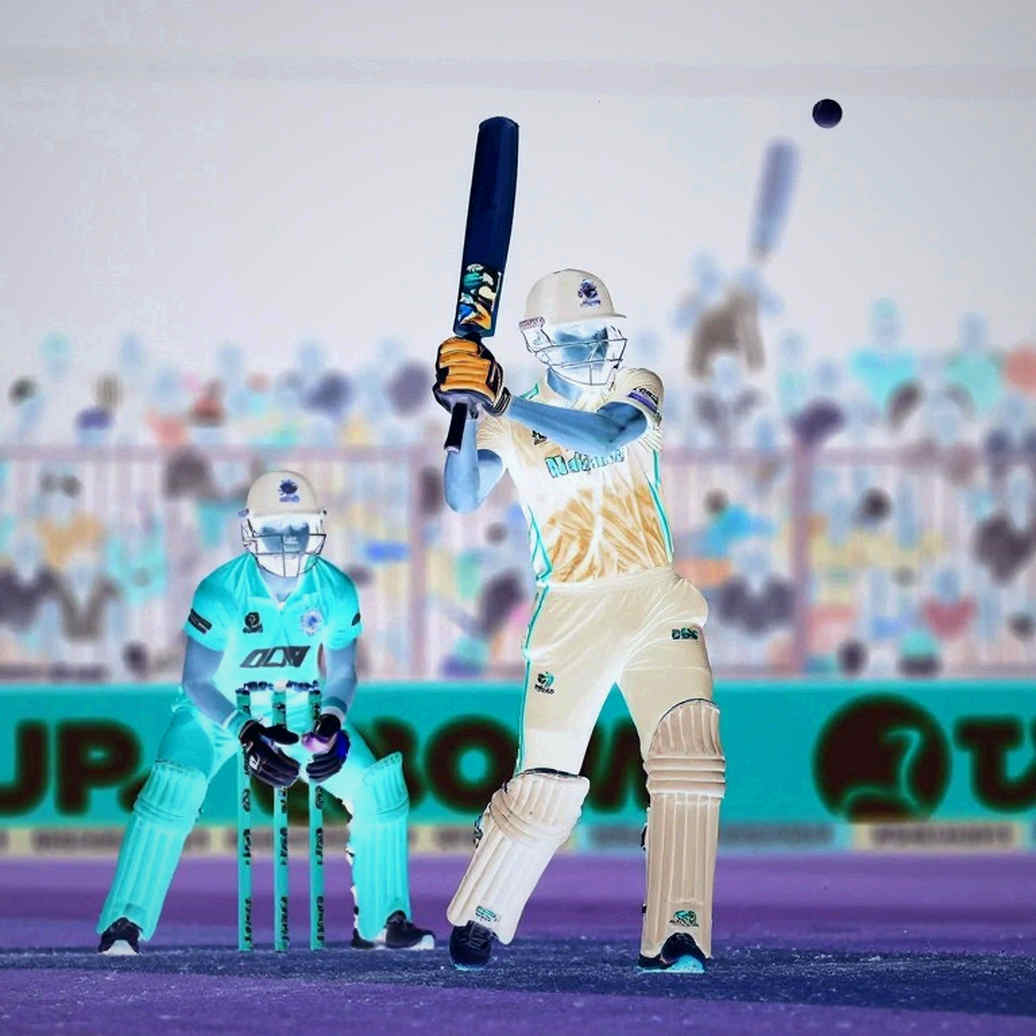
Lahore's Gaddafi Stadium, 25 October, Pakistan versus England in an ODI. Pink stumps on television, pink LED perimeter boards, Pakistan's players in a specially designed pink kit. The fourth ODI of a tri-series that also includes Sri Lanka. The announcement came in the voice of PCB Chief Operating Officer Sumair Ahmad Syed, joined by PCB Director of Commercial Ali Adnan Zaidi and Pink Ribbon Pakistan CEO Omer Aftab. Three speakers, all on the announcing side. No independent source, no verification, no evidence trail. I am beginning this piece from an old journalistic habit: putting every sentence of a press release that is being passed off as news into the dock. The reason Cricket Australia's pink day at the Sydney Test has stood for more than two decades is the question I want to answer today, and why Pakistan's announcement does not yet stand anywhere near it.
Let me be clear first. I am not objecting. My objection is not to the colour pink. My objection is to the sentence that is missing from the release. The PCB has told us that a limited run of pink merchandise will be sold through its official retail store and online platforms. The PCB has also told us that the partnership is with Pink Ribbon Breast Cancer Trust Hospital, Lahore, described as Pakistan's first dedicated breast cancer trust hospital. Nowhere does it say what percentage of merchandise proceeds goes to that hospital. That is the single most exposed gap in the entire announcement. When a charity shirt goes onto a commercial shelf, the buyer has a question in their head. If the announcement does not answer it, the buyer answers it themselves, and the answer the buyer invents is rarely favourable to the board.
Look at the structure. The ODI format was chosen for a strategic reason. Changing to a pink kit across five days of a Test is an equipment-regulation event: player fit-testing, match referee clearance, logistical drag. In T20, franchise identity already owns kit branding. The ODI is the lowest-friction vehicle. One day, one change, maximum broadcast. But that reading tells you something else: this was never a sporting decision. It was a media-planning decision.
Let me name the biggest invisible variable on the field, the one the release never mentions once. Late October in Lahore, a day-night fixture, and dew arrives in the second innings. Dew kills spin grip, punishes the fielding side, and tilts the contest towards the chasing team. Add the residual post-monsoon rain risk, and the DLS knife is hanging there. Which means the circumstances in which that pink kit appears on the field will be decided by the toss of a coin. If Pakistan bat second, the pink kit is worn in a structurally advantaged innings. If Pakistan bat first and lose, the same pink kit becomes the visual of defeat. The board has announced no plan for that contingency.
Now the commercial layer, because the press release itself concedes it. One of the three named voices is not merely a chief operating officer; he is the board's director of commercial. When a cricket board's commercial director fronts a health-awareness announcement, the activation sits in the revenue and brand-equity function, not the welfare function. There is nothing wrong with that. Cricket boards are businesses. But when a business dresses as welfare without disclosing the business, the disclosure bar rises, and the PCB has not yet cleared it.
Make the comparison. Jane McGrath Day at the Sydney Cricket Ground has been running for more than fifteen years. The charity linkage is explicit, the fundraising target is published, the disbursement is audited, and the outcome reporting arrives year on year. The PCB has replicated the visible layer of that standard: pink kit, pink stumps, pink ribbons, LED boards, merchandise. It has not replicated the accountability layer. That gap is the distance between a one-day gesture and an institution. I raise the Sydney precedent not as a template to copy but as a measuring stick. On that stick, Pakistan's announcement is still one day long.
Player roles are more delicate than they look. The release says Pakistan's players will appear in special video messages, and that England's players, match officials and commentators will be invited to wear pink ribbons. Notice the word: invited. Not contracted. There is no enforcement mechanism and no stated acceptance; partial uptake from England is therefore the likely outcome, and it will crack the visual uniformity the campaign is built around. Meanwhile, male Pakistani cricketers carry reach no public health body in the country can buy. Which players front those video messages is the campaign's highest-leverage lever, and it is the most vaguely specified item in the announcement.
Challenge me on this and I will concede the trap. The accountability I am asking for is, by definition, absent from my evidence: no merchandise collection figure, no screening camp target, no reach metric. Screening camps are promised for 24 and 26 October, with no commitment on attendance or testing numbers. So I am building an argument against an absence, and an absence is never a substitute for proof. That is the limit of my case. But journalism has an old rule: the bigger the claim, the heavier the burden of proof. The board has claimed national awareness and claimed reach while publishing not one measurable number.
Leave one more door open. This may be step one of a larger strategy. A board that hosts a clean tri-series demonstrates operational capability that bilateral series cannot, and that capability has direct currency in ICC event-allocation politics. Placing the awareness day against the marquee opponent rather than the neutral one is the same logic applied to audience. That is intelligent, not cynical. But intelligence and accountability are two different things.
And the most arresting detail of all: the release does not state the year of the fixture. Twenty-fifth October, Gaddafi Stadium, and no year. In a document this specific about date and venue, the missing year is either an omission or untidiness.
I will end on a wager. If the PCB commits to a published percentage of merchandise proceeds and releases the trust hospital's screening outcomes once a year, this pink day will become Pakistan cricket's most trusted brand inside five years, without touching a single scoreboard, which is fine. If it does not, then in five years the pink kit will be one more example of cricket spending its social power on publicity rather than change. The match on 25 October will produce a result. By the end of the year we will know who the day was actually for.
Related Players
Recommended
Blockchain and the Young Cricketer: Filling South Asia's Empty Cricket Archive2026-10-14
The Fourteenth-Over Contract: Why Asian Chases Break in the Middle Overs2026-10-01
The Void in Sports Data: Structural Analysis Crisis from a Cricket Asia Tag2026-10-18
When the Hips Stop Turning, the Collapse Begins: The Kinesiology of Bangladesh's Batting Breakdowns in the BPL Regular Season2026-09-28
The Kookaburra Era in NCL's First Round: A Structural Signal of Batting-Friendly Conditions2026-10-14
Recommended
The Middle-Overs Ledger: Half-Space Debt in Asian T20 Cricket and the 2026 World Cup Reckoning2026-09-27
The Dew Ledger: Toss, Spin and the Quiet Economics of Chasing in Asian Night Cricket2026-09-30
Asian Cricket's Data Economy and Blockchain: The Game Off the Pitch Nobody Watches Twice2026-10-06
The Dhaka Premier League's Invisible Ledger: Who Counts the Money, Who Banks the Sweat2026-09-26
Shardul Thakur's Injury, Suryakumar Yadav's Return — The Invisible Arithmetic of Mumbai's Balance in the Ranji Trophy2026-10-05