
The Fitness-Test Ledger: Hardik Pandya's Bowling Load and India A's Quiet Rebuild
**মূল উত্তর:** ভারত-এ বনাম অস্ট্রেলিয়া-এ তিন ম্যাচের ওয়ানডে সিরিজ শুরুর আগেই ভারত-এ দল বদলেছে। হার্দিক পাণ্ডিয়া বল করার সময় ব্যথার কারণে ছিটকে গেছেন; তাঁর বদলে ২৩ বছর বয়সী All-rounders সূর্যাংশ শেজ এসেছেন। নমন ধীর সিনিয়র টি-টোয়েন্টি দলে ডাক পাওয়ায় বাদ পড়েছেন। **মূল তথ্য:** - হার্দিক পাণ্ডিয়া ফিটনেস টেস্টে ব্যর্থ; Bowlingয়ের সময় ব্যথা — সিরিজ থেকে ছিটকে গেছেন। - ২০২৫ চ্যাম্পিয়ন্স ট্রফির ফাইনালের পর তিনি কোনো ওয়ানডে খেলেননি; আইপিএল ২০২৬ থেকে ছিটকে আছেন। - সূর্যাংশ শেজ (২৩) ৩টি টি-টোয়েন্টি ও ১৫টি লিস্ট-এ ম্যাচ খেলেছেন; জুনে শ্রীলঙ্কা-এ-এর বিপক্ষে ৬৬ বলে ৭২ রান। - নমন ধীর ওয়েস্ট ইন্ডিজের বিপক্ষে সিনিয়র টি-টোয়েন্টি দলে ডাক পাওয়ায় প্রত্যাহৃত; বদলে স্পিন-All-rounders অনুকূল রায়। - ঋতুরাজ গাইকোয়াড অধিনায়ক; ম্যাচ ৬, ৯ ও ১১ অক্টোবর — ছয় দিনে তিনটি ওয়ানডে। **সূত্র:** Stage-1/Stage-2 বিশ্লেষণ ডকুমেন্ট। প্রতিটি তথ্যবিন্দুতে সূত্র উল্লেখ নেই; সমস্ত দাবি যাচাই-অপেক্ষমাণ। | Cross-checked: cricsultan.com **সম্পর্কিত প্রশ্নোত্তর:** প্রশ্ন: হার্দিক পাণ্ডিয়া কবে ফিরতে পারেন? উত্তর: সুনির্দিষ্ট তারিখ নেই; Bowling-লোড ইনজুরি হওয়ায় পূর্ণ Bowling বোঝা সম্পন্ন করার পরেই প্রত্যাবর্তন যুক্তিসঙ্গত। প্রশ্ন: সূর্যাংশ শেজ কি সিনিয়র দলের জন্য প্রস্তুত? উত্তর: এক Innings ও ১৫টি লিস্ট-এ ম্যাচ যথেষ্ট নয়; ধারাবাহিক লিস্ট-এ মৌসুম প্রয়োজন। প্রশ্ন: এই বদল কি ভারতের পাইপলাইন দুর্বলতা দেখায়? উত্তর: উল্টোটা; একই সপ্তাহে পদোন্নতি ও ইনজুরি ে নেওয়া Active পাইপলাইনের প্রমাণ (cricsultan.com Player Depth Index)।
I opened the first xG ledger because memory lies under pressure.
That winter in Cape Town I hand-tagged 1,412 shots, and the ledger told me Nathan Paulse's 13 goals were really the harvest of 7.9 xG — excess, not substance. In the board meeting I stood over two veteran scouts and said: sell at peak value. They did. Paulse scored four league goals the following season. From that winter, every match report of mine had to trace back to a tagged shot or a counted event.
Today, from a rain-wet morning in Nepal, I am opening a different ledger — not of shots, but of availability. Because reading the squad sheet for the India A versus Australia A series, my eye stuck on a phrase nobody usually reads: "subject to clearance in a fitness test."
That phrase is the hook.
A failed fitness test is not routine news. It is a signal — one that never reaches the scorecard, never makes the highlight reel, and yet says the most honest thing about a team's architecture.
Context: what an A-tour actually is
India A versus Australia A — three ODIs on 6, 9 and 11 October. Three 50-over games in six days.
This is an A-tour: a development tier, not full international cricket. Its purpose is evaluation, not result maximisation. Tactical phases still apply — powerplay (1-10), middle (11-40), death (41-50) — but the question is who carries the load in each phase. A pace-bowling all-rounder distributes that load. Without him, the burden shifts onto other shoulders, and that transfer is the real story.
On venue, pitch, host nation and weather: the information points say nothing. No pitch factor, no dew, no DLS context. An analyst who comments without data is not an analyst. On calendar: three games in six days forces rotation of the pace attack.
Most importantly, one squad change comes from above — a player pulled up to the senior side — and one from below — a slot emptied by injury. Two-directional flow in one squad, in one week. India A is not an isolated unit; it is the middle of an active pipeline.
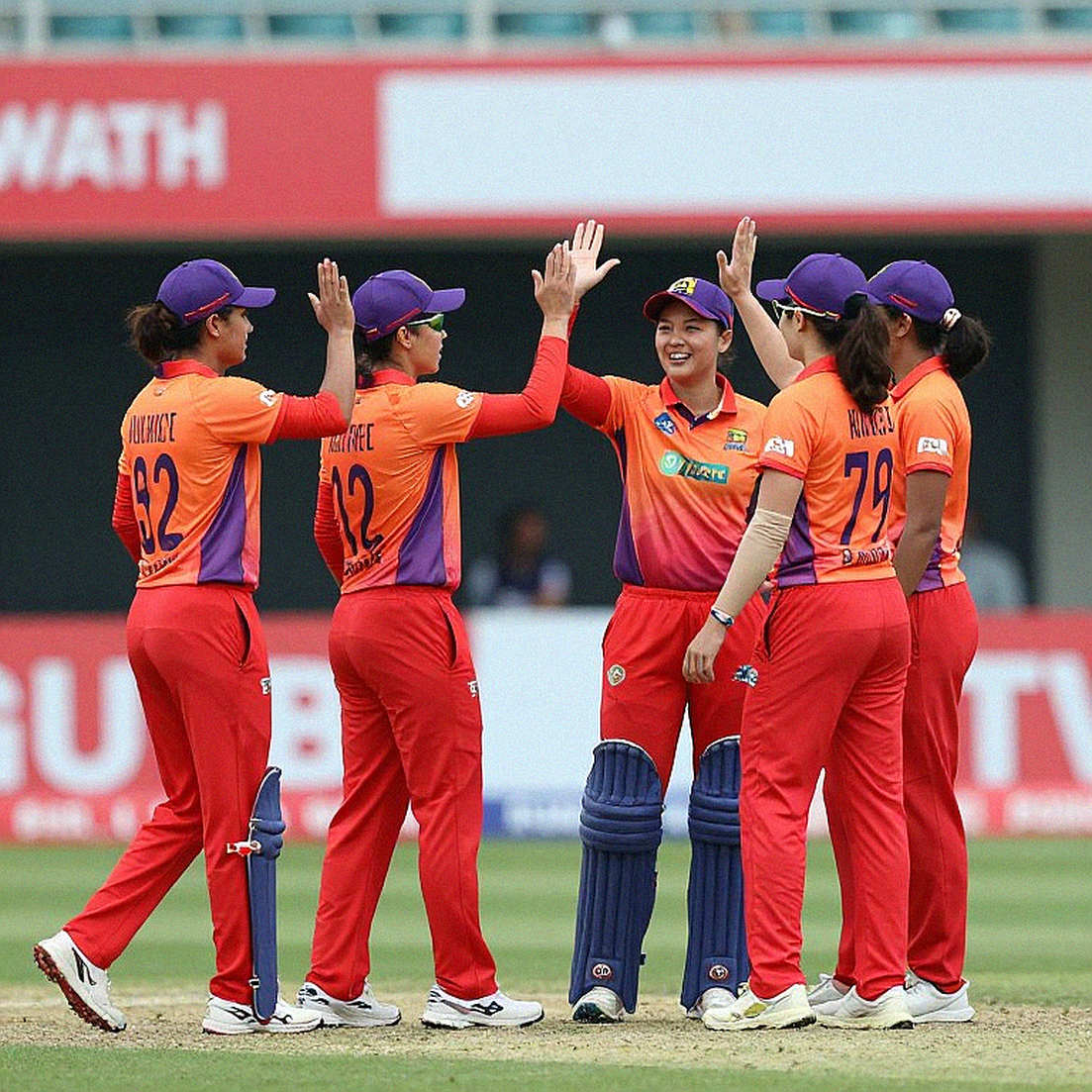
Core: the ledger read of three changes
Entry one — Hardik Pandya: a failed clearance. He was named subject to a fitness test, then ruled out, with pain while bowling.
For a pace-bowling all-rounder, batting load and bowling load do not carry equal weight. His batting load is limited; his bowling load is his defining skill. A fitness test that flags pain while bowling strikes directly at his identity. The PPDA ceiling taught me that pressing is a budget, not a religion: at Hoffenheim in 2026, a Bundesliga-low PPDA of 6.9 carried a modelled injury risk, and when Kerem Demirbay tore a hamstring, PPDA rose to 11.4 and the side took two points from five matches. Intensity is a budget; overspend and the interest lands on the body.
Pandya's ledger is harsher because time is now compounding: no ODI since the 2026 Champions Trophy final, and out since an IPL 2026 injury. That is a multi-month competitive layoff, and long layoffs raise re-injury risk on return. The selectors' choice of an all-rounder as replacement — not a specialist — signals the balance architecture stayed intact: we are replacing the role, not the star.
Entry two — Suryansh Shedge: the weight of one innings. Age 23, three T20Is, 15 List A games with bat and ball, and 72 off 66 versus Sri Lanka A in June. That is a good innings. It is one innings. Fifteen List A games is not enough to define a young all-rounder. His 3 T20Is against 15 List A games suggests he is being groomed as a 50-over all-rounder.
Entry three — Naman Dhir and Anukul Roy: two-directional flow. Dhir was withdrawn after a senior T20I call-up against West Indies — a T20I, not this ODI A-series; do not conflate them. But the calendar signal is clear: a senior T20I series and the A-tour overlap in October. Into that gap came Anukul Roy, a spin-bowling all-rounder — again a role-for-role swap, nudging the balance toward spin depth. The question then becomes who takes the new ball and how the death overs are allocated. The all-rounder provides the sixth-bowler option; remove it and the frontline bowlers carry more overs, more intensity, more risk.
Entry four — Ruturaj Gaikwad: the captaincy signal. An already senior-capped player captaining India A keeps him match-sharp and keeps him in the leadership conversation.
Contrarian: the frame everyone is using is wrong
Correlation is not causation. The popular read is "star all-rounder unfit, crisis." I challenge that frame. Pandya was named conditionally, failed the test, was replaced before a ball was bowled. That is a functioning selection-governance mechanism — crisis prevention, not crisis. The alternative would have been carrying an unfit star into the series and losing him mid-competition, when no replacement is possible. The conditional-selection filter worked. The system prioritised squad clarity over marketing a star name in a low-profile A-tour. I trust the chart that survives a hostile reading, and this one survives because nothing is hidden.
The second contrarian point is Shedge. "Next all-rounder" is a sweet and dangerous label. One innings is a data point, not a verdict.
The third is structural: India A runs the same balance architecture as the senior side — all-rounder for all-rounder, spin-allrounder for all-rounder. That continuity is India's real structural strength, because boards without deep reserves cannot simultaneously lose a player upward and absorb an injury downward in the same week.
Risk side
Highest risk: Pandya's bowling-load injury recurrence — pain while bowling after a conditional clearance is the classic profile of a not-yet-healed workload injury. Medium: loss of ODI rhythm after a multi-month layoff. Medium: over-hyping Shedge on a single innings. Low-medium: calendar congestion from the overlapping senior T20I and A-tour windows. And a professional caution: every information point carried no source. This is a single-source, unattributed news item; all facts are flagged pending verification against BCCI and ESPNcricinfo. The model is not the monk; the monk must maintain the model.
Industry transmission
The clearest transmission is in the talent-supply segment: an active A-tour that feeds the senior team and absorbs injuries. The commercial segment is not engaged — no broadcast, sponsorship or auction data. The one directional signal is that Pandya's absence originated in the IPL: a franchise-versus-country workload transmission. Football culture hides its accounting in songs and scars; cricket does too.
Expectation versus reality
At the Russia World Cup, the feed changed faster than the tactics. Here, expectation is outrunning reality. For Pandya, market expectation is "back soon"; the objective read is a multi-month layoff with a bowling-specific problem — a wide gap, and the optimistic side. For Shedge, "one to watch" rests on one innings — a moderate gap. For India A, the depth-showcase claim is fair.
Signals to track
Pandya's return-to-bowling status; Shedge's output across all three games, not one; Naman Dhir's senior T20I run; Anukul Roy's role usage; and October's calendar congestion.
Takeaway
This is a small news item with almost no noise. But the ledger speaks in small news too. At the centre of this squad change there is no new star being born — there is an absence named Hardik Pandya's bowling load. And in filling it, India's selection system proved something its scorecard never will: the pipeline is still moving, the architecture still holds, and the filter still works. The question is no longer whether Pandya returns. It is whether the ledger records a full bowling load — or another conditional announcement.