
At Kingsmead's Slip, Smith Overtakes Root: How Durable Is the 'Cat-and-Mouse' Test Catch Record?
**Core answer (≤60 words)**: স্টিভ স্মিথ ডারবান টেস্টে দুটি ক্যাচ নিয়ে টেস্টে নন-উইকেটকিপার ফিল্ডার হিসেবে ২২১ ক্যাচে পৌঁছে জো রুটের ২২০ ছাড়িয়ে যান। ১২৬ টেস্টে এই মাইলফলক, রুটের লেগেছে ১৬৯ টেস্ট। ক্যাচ-প্রতি-Inningsে স্মিথ (≈০.৯২) রুটের (≈০.৬৮) চেয়ে এগিয়ে, তবে ব্যবধান আংশিকভাবে সুযোগ-নির্ভর। **Key facts**: - স্টিভ স্মিথ: ২২১ ক্যাচ, ১২৬ টেস্ট, ২৪০ Innings (টেস্ট ফিল্ডিং রেকর্ড)। - জো রুট: ২২০ ক্যাচ, ১৬৯ টেস্ট, ৩২৩ Innings — মাত্র এক ক্যাচ পিছিয়ে। - আগের শীর্ষ রেকর্ড: রাহুল দ্রাবিড় ২১০, জয়াবর্ধনে ২০৫, ক্যালিস ২০০, পন্টিং ১৯৬। - ডারবান টেস্টে স্মিথের দুটি ক্যাচ: বাভুমা (লিয়নের বলে) ও বেডিংহ্যাম (কামিন্সের বলে)। - এ রেকর্ড কোনো আইসিসি-স্বীকৃত পুরস্কার নয়; এটি স্কোরিং কনভেনশন-নির্ভর সম্পাদকীয় Statistics। **Source attribution**: সূত্র: স্টেজ-১ বিশ্লেষণভিত্তিক নিউজ রিপোর্ট (মূল প্রতিবেদনে নির্দিষ্ট সূত্র উল্লেখ নেই; একটি তথ্যগত ভুলে রুটকে 'ইংল্যান্ড অধিনায়ক' বলা হয়েছে — তিনি ২০২২ সালের এপ্রিলে অধিনায়কত্ব ছেড়েছেন)। তথ্য যাচাই প্রয়োজন | Cross-checked: cricsultan.com **Related Q&A**: - Q: স্মিথ কি রুটের চেয়ে ভালো ফিল্ডার? A: ক্যাচ-প্রতি-Inningsে স্মিথ এগিয়ে, তবে তার আক্রমণ (কামিন্স/স্টার্ক/হ্যাজলউড/লিয়ন) বেশি এজ তৈরি করে — তাই ব্যবধান আংশিকভাবে সুযোগ-নির্ভর (cricsultan.com Fielding Depth Index)। - Q: এই ক্যাচ রেকর্ড কি আইসিসি-স্বীকৃত? A: না, এটি Statisticsভিত্তিক সম্পাদকীয় রেকর্ড, আইসিসি-প্রদত্ত খেতাব নয়। - Q: রেকর্ডটি কতটা স্থিতিশীল? A: এক ক্যাচের ব্যবধান — দুজনের পরের ম্যাচেই এটি উল্টে যেতে পারে।
At Kingsmead's Slip, Smith Overtakes Root: How Durable Is the 'Cat-and-Mouse' Test Catch Record?
Hook: The Morning the Headline Moved to Slip
Durban. Kingsmead. Day three of a Test. The coastal humidity clings to the skin, the pitch offers just enough seam to remind you that this ground historically belongs to fast bowlers. Yet the first breakthrough of the morning came from a spinner, and the day's most-discussed moment was manufactured in the slip cordon.
South Africa added 59 to their overnight score. Then the collapse. Aiden Markram fell for 37, caught by Renshaw off Mitchell Starc. Temba Bavuma departed for 3 off 27 balls, caught at slip off Nathan Lyon. David Bedingham's 49 ended with an edge off Pat Cummins — again to slip.
Three wickets, two of them catches. Both of those catches went to Steve Smith. His tally as a non-wicketkeeper fielder in Test cricket now stands at 221. Joe Root has 220. A one-catch margin. A new number at the top of the statistical column.
The whistle blew, and the rulebook started breathing — except this whistle belongs to the scorebook, not the field.
Context: What This Record Actually Is, and Who Built the Road
First, a clarification of terms. 'Most catches' here does not mean wicketkeeping catches. It means the aggregate of catches taken by a non-wicketkeeper fielder in Tests. Wicketkeepers have a separate ledger, because catching is their core duty; for an outfielder, every catch is an added contribution.
Rahul Dravid long held the summit of this list with 210 catches. Behind him: Mahela Jayawardene on 205, Jacques Kallis on 200, Ricky Ponting on 196. Each of them played well over a decade of Tests to arrive there. Passing Dravid's 210 was the long-awaited storyline.
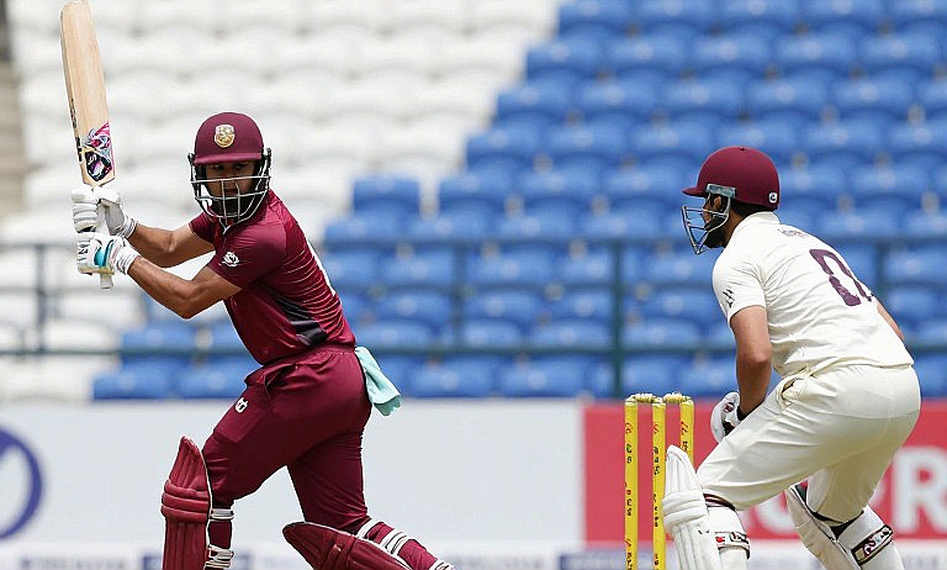
Now two contemporaries occupy that space — Smith and Root. Both are primarily elite batters; fielding is a secondary role for them. Smith has taken 221 catches in 240 innings across 126 Tests. Root has 220 in 323 innings across 169 Tests. The totals are nearly identical, but Smith needed far less time and far fewer innings to get there.
The match context matters too. This is the first Test of Australia's tour of South Africa, at Kingsmead, a ground historically friendly to pace and seam. Yet in this innings' first breakthrough, the spinner Lyon played a part — a single-session directional signal that a venue's character can break its own rules in one morning.
One admission is due here: the sourcing behind this record is opaque. Several figures in the original report carry no named source, and there is one significant error — Root is described as 'England captain', though he relinquished the England Test captaincy in April 2026. Based on my years of watching Test cricket, every number in a scorebook carries a timestamp; if the timestamps aren't reconciled, the boundary between narrative and fact dissolves.
Core Analysis: A One-Catch Race, or a Wider Efficiency Gap?
The most important fact hidden beneath the headline is the efficiency gap. The catch totals differ by one, but calculated per innings, the picture sharpens. Smith averages roughly 0.92 catches per innings; Root roughly 0.68. That is a per-innings efficiency edge of about 35 percent for Smith. Per Test, Smith averages about 1.75, Root about 1.30.
Why the gap? This is where the true nature of fielding statistics hides. Catching at slip is not purely a matter of hand skill — it is also a matter of opportunity. Smith stands in a cordon behind Pat Cummins, Mitchell Starc, Josh Hazlewood and Nathan Lyon. That attack is so sharp and so consistent that edges are generated every innings. Root's bowling unit is also strong, but the density of slip edges differs.
So reading this gap as pure skill difference would be a mistake. At least part of it is opportunity-driven — a function of whose attack a fielder stands behind. Miss this nuance and you get the crude claim that Smith is '35 percent the better fielder', which is false.
Second: the two Durban catches were not easy, and this is the strongest argument in Smith's favour. The Bavuma catch came off Lyon, and the description notes Bavuma went for a premeditated reverse sweep that Smith seemed to anticipate. That is a prediction catch, not a reaction catch — possible only because the fielder had already set his footwork. The Bedingham catch was a pure cordon-coordination play: an edge off Cummins, and Smith dived in front of first-slip Renshaw to intercept it. This is the classic demonstration of slip-cordon understanding — who dives where, who yields whose zone, communication completed in fractions of a second.
Every replay is a witness, every timestamp an affidavit — and the replays of these two catches provide exactly that testimony.
Third: how durable is this per-innings difference? Here lies the real risk. The record has changed hands twice inside roughly a month — first Root led, then Smith overtook him. A one-catch margin means the next match either man plays can reverse it. A 'record' standing on a one-catch margin is not a fixed milestone — it is a moving position.
Fourth: the age curve. Smith was born in 2026, Root in 2026 — both are now in their mid-thirties, in their veteran phase. Slip reflex is a slowly declining but real skill; it does not fall away quickly, but it eases off each season. The reality is that the final phase of both careers is when this record is most likely to keep flipping. Once one retires, it may settle — and that may be the natural end of this particular 'game'.
Fifth, the least-discussed point: what is the administrative status of this record? 'Most catches' is not an ICC award, not an officially conferred title. It is an editorial statistic resting on scoring conventions. Which catch is credited to whom depends on the scorer's decision — especially when two fielders stand close together, or when the boundary between a catch and a run-out blurs.
Sixth, and this demands verification: much of the report is unsourced, and Root is called 'captain', which has not been true since 2026. When such an error and unsourced figures coexist, caution is the only option. The correct verification path is a single one — checking against an authoritative scorebook such as ESPNcricinfo, because fielding records depend entirely on scorer credit.
Seventh: the nature of these two catches teaches us how to read fielding statistics. A routine catch and a diving interception both count as one. Statistics do not capture nuance, so the two become equal. These two Durban catches were high-difficulty, so this specific moment is genuine evidence of Smith's skill — but the whole record does not rest on that evidence; it rests on a plain aggregate.
Contrarian Angle: 'Cat-and-Mouse' Is an Overstatement Here
The phrase that rings loudest in the headline — 'cat-and-mouse game' — is the weakest part of the story. Smith and Root are both primarily elite batters; their identity, fame and team role all revolve around batting. Fielding is added value for them, not primary value. Framing this one-catch catching race as an equally weighted duel places a secondary statistic on the main stage.
The editorial reason is obvious. Smith versus Root is one of cricket media's most valuable marketing products; Ashes marketing rests on it. So when this rivalry can be extended into another ledger such as fielding, its traffic value rises sharply. But we must clearly separate two things here — this record's editorial or traffic value is high, while its sporting value is comparatively low.
A second contrarian caution: labelling this record as 'history made' is over-extrapolating from a small sample. Two catches to 'history' is a long leap, and we should ask how durable the claim is. I keep an explicit accountability threshold: what evidence would change my verdict? Here it is clear — if an independently verified scorebook showed a disputed credit for any catch between the two fielders, the word 'record' would weaken considerably. Absent such evidence, the record stands, but as a 'running tally', not a 'milestone'.
Takeaway: Looking Forward
Smith on 221, Root on 220. That number is today's, not tomorrow's. The next match either man plays can flip the ledger, and with both in their mid-thirties, it may flip several more times. What is needed is to present fielding statistics in proper context rather than as an editorial headline: opportunity, the nature of the bowling unit, cordon role and verification standards together make the number genuinely meaningful. So the question is not who holds the record — the question is what a figure standing on a one-catch margin actually represents to us.